Navigating Non-Linear Expat Life: A Repatriation Journey

Collins Dictionary describes non-linear as “Does not progress smoothly from one stage to the next in a logical way…makes sudden changes or goes in different directions at the same time.”

Most days, we thrive on our non-linear, unpredictable Foreign Service journey, but It’s “PCS” season in the diplomatic community here, which stands for Permanent Change of Station, and I’m wishing for a smooth transition, especially as a U.S. federal government family in the current political climate. While bidding for our next assignment these last few months, we thought briefly our family might be moving to Turkey, then chances were good for Prague (for which I was pining), however, now we will land in DC this summer for two years.

After more than a decade abroad in Swaziland, Cairo, Honduras, and Gabon, the best part of repatriation will be the proximity to friends and family, especially, reuniting with our son who left for boarding school one and a half years ago after a military coup. We’ve had holidays and breaks together, but in between, contact has mostly been via video chats and I cannot wait for us to be back under one roof as a family.
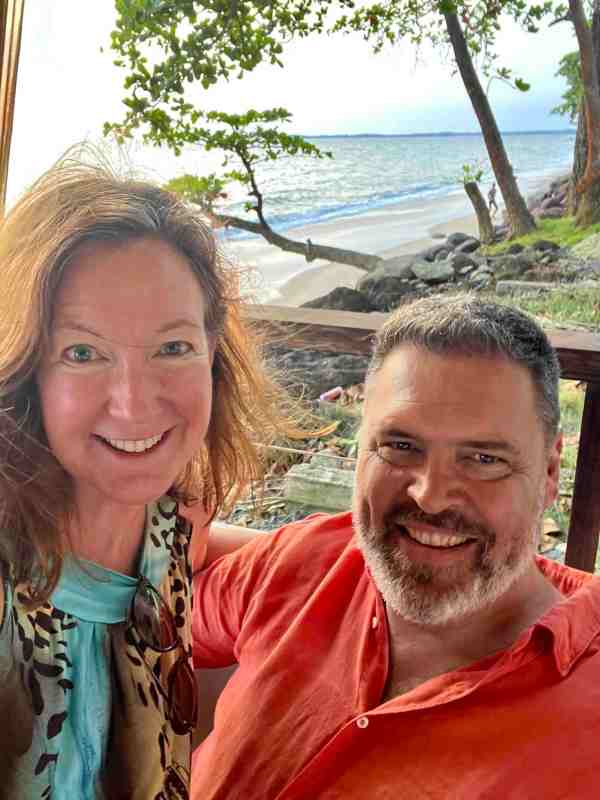
Returning to America, we know to expect some reverse culture shock and necessary adaptations. Focusing on the positive, there is the anticipation of choosing which property we get to live in, a change of seasons (sweaters and boots!), drinking water from the tap, smooth roads accompanied by (mostly) civil driving rules, ample electricity and countless conveniences, like quick trips to the store without hunting for ingredients, browsing the library for a book in english, and the instant gratification of finding the essentials without much hassle.

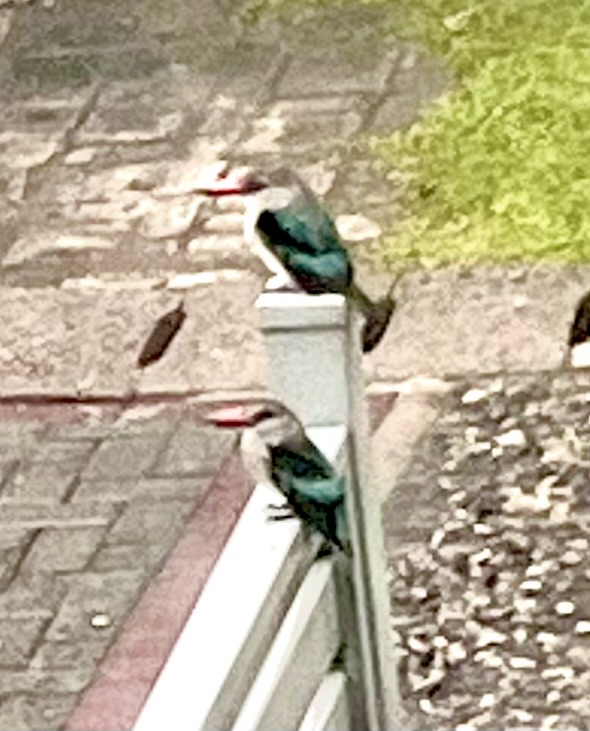
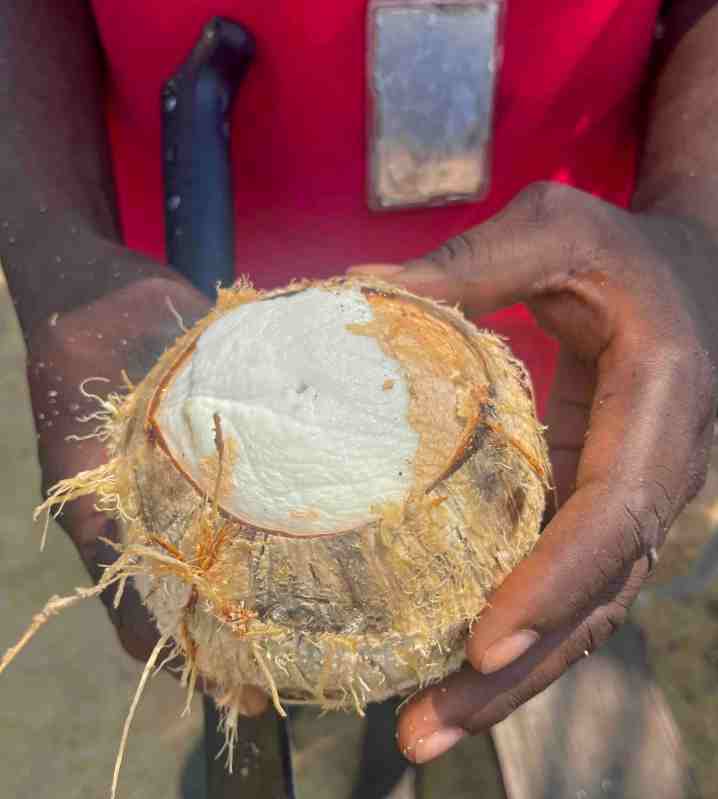
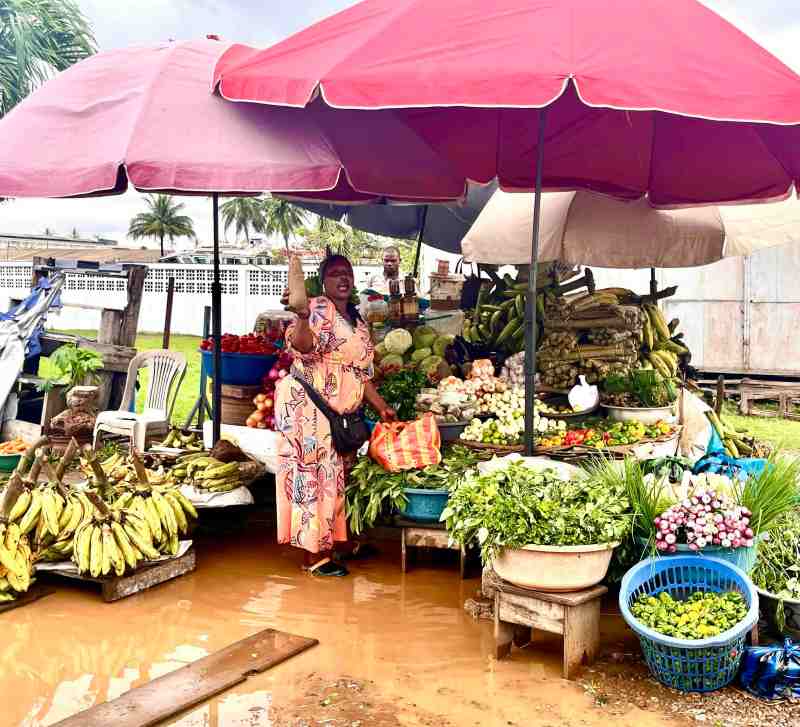
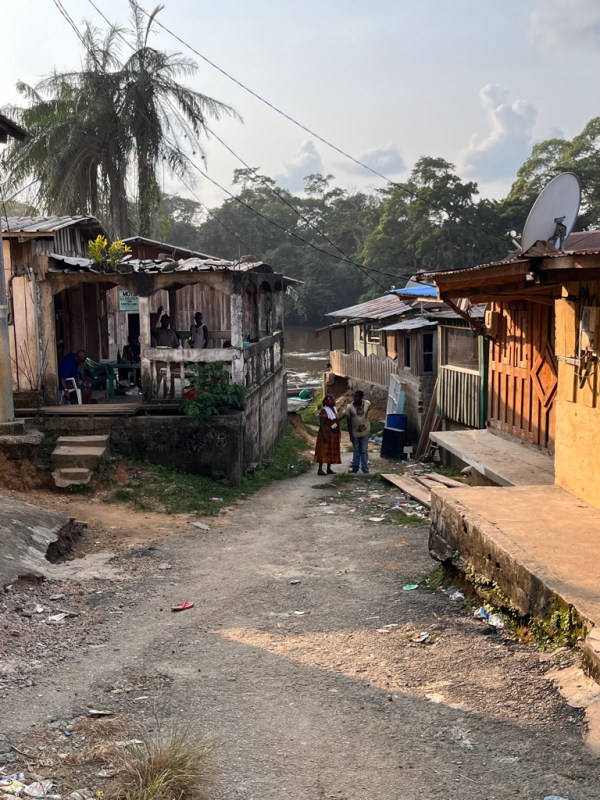
But, how I will miss our dear friends, conversing in foreign languages, and the rich cultural experiences and adventurous travel. I will miss buying produce and fish from the source and the unexpected gestures of kindness, like the gardener gifting me a fresh coconut. And the stunning beauty of fiery sunsets near the equator, watching storms roll in next to Kingfishers perched on our fence, and the wild vibrancy of our surroundings.

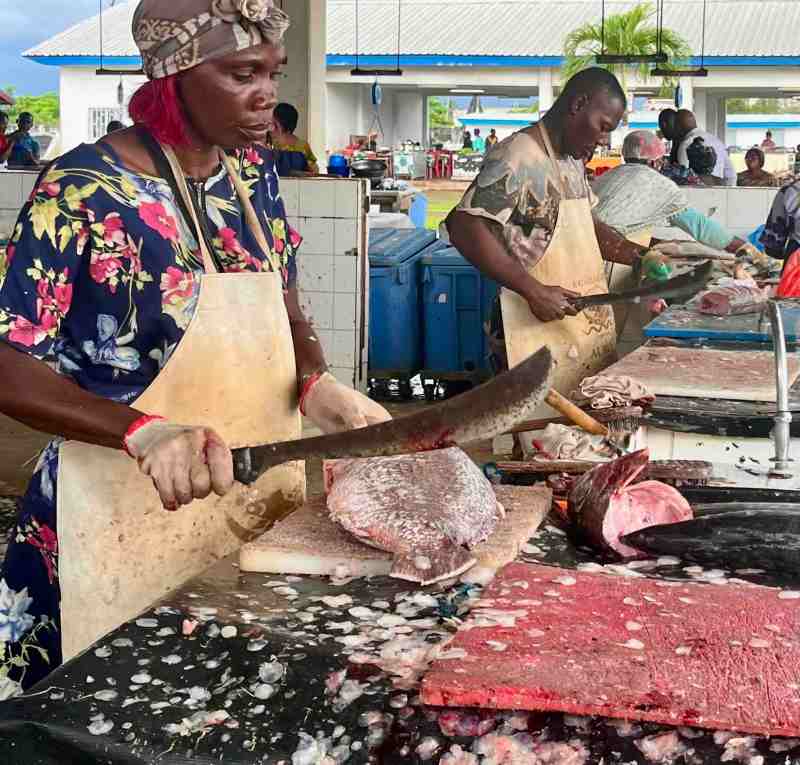
I’ll even miss the frequent life lessons that come fast and hard in developing countries, challenging us to find solutions without the resources and tools we’re accustomed to; at times living with instability and even fear, operating far beyond our comfort zones. Learning to do without and living on less. And the important, constant reminders that as Americans how fortunate we are to have access to clean water and air, sturdy living quarters, stable food sources, education, accessible healthcare and the protection of human rights – all of which far outweigh what we’ve witnessed in Central America and Africa. (Unlike what the show “The Diplomat” portrays, our life is a lot more grit than glamour).

Out of necessity, I’ve reinvented myself in each of these foreign lands. Through building community and a life for our family, one hurdle at a time, I’ve grown emotionally stronger, braver, and more self-assured. Since I’ve been unable to consult overseas in my field (illicit finance, deemed a conflict of interest with my husband’s job), I’ve shifted to writing, public speaking, developing a deep spiritual relationship with nature, and cultivating a quieter lifestyle.

Repatriation will take resilience and patience. We’ll need to find a car, rent a home, register for school, and furnish a house- parts of which will come to us in stages: a few hundred pounds of household effects (clothes, linens, kitchen utensils and things needed sooner than later) from Gabon will arrive by plane, followed by crates full of carpets, furniture, and goods that will make a longer journey by cargo ship.

Back on American soil, I’ll be interested to see who I will I become. I’m secretly afraid I’ll lose my wilder spirit–that it might get buried or swallowed up by box stores instead of roadside markets, or by the ease of days spent mostly indoors and without having to tap into bravery and daring. But I imagine although our lifestyle stateside will likely be faster-paced, it will also be more even-keeled, safer, and less like living in survival mode.

As a more relaxed mama with our child at home, perhaps I’ll once again sleep through the night. And, after a long hiatus in my career, I’ll navigate reentry into the work place in a way that feels meaningful. It might take a while, but the house will come together–quirky as it may be–and we’ll start 8th grade and new jobs, discover new friends, activities, and spaces to explore. Also, after grieving the recent loss of our sweet Golden Retriever, “Biscuit,” we’ve promised our son we’ll consider becoming dog owners again once we’re settled.

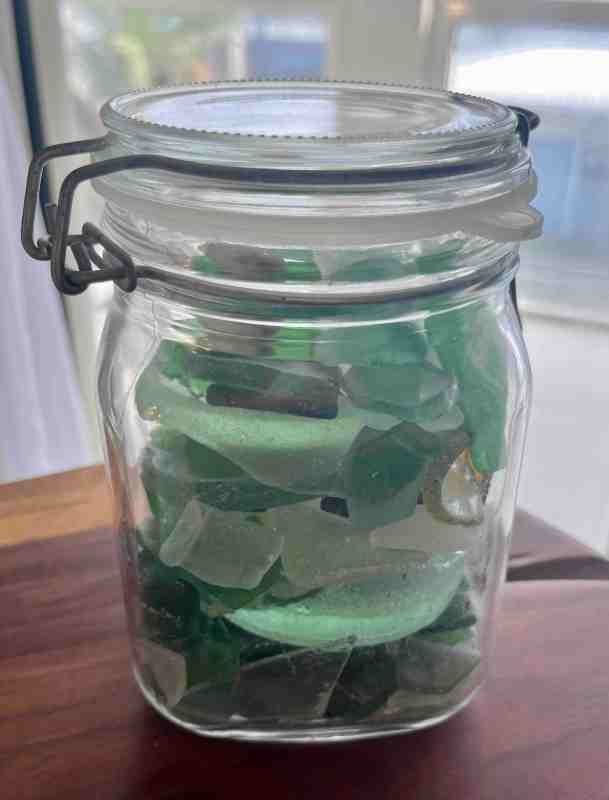
On this new journey home, to blend the past with the present, we’ll bring along talismans collected during our time abroad— local art, sea glass, shells, and feathers– all imbued with moments we’ll cherish.

Cheers to “fair winds and following seas.” We hope you’ll come visit us next fall in Arlington and create new memories with us.

Peace, Joy, and Light, Tracy

Seeking Joy in the Liminal Spaces

Lately, I’ve found delight in the unpredictable, in-between moments of life. Like a crack allowing light to seep into a dark room, there’s a fleeting, intangible something that happens to turn the ordinary into the extraordinary. I’d just returned to Gabon days earlier when my husband Brad mentioned he’d bought tickets to the Masquerade Ball on Friday night. “We can donate them if you’re too jet-lagged?” I shook my head. “I’d love to go.”

The ball was just as fun as I’d anticipated- a festive evening of mask-wearing, dancing, laughing with friends, and good food. But what left an impression afterward wasn’t the main event. It was a brief connection with a Bwiti man who wore spiritual makeup and played a small stringed instrument as the guests arrived. The words in his tribal song were incomprehensible to me, yet I was transfixed. His music momentarily transported me somewhere akin to that liminal space between dreaming and waking. That, I had not anticipated.

Looking back over our family photos of an enjoyable, action-packed summer, the most noteworthy memories were the ones unplanned and unexpected. Enthusiastic to share my love of London with my son on his first trip there, I packed in the tourist activities Ramsay had requested for our long weekend, to include fish and chips in a real pub and rides on the Tube, the London Eye, and a double-decker bus. We crossed bridges over the Thames on foot, explored the Tower of London’s jewels, torture chamber, and raven-crested turrets, and ogled the toys and food halls of Harrods (where he selected a piece of chocolate cake the size of a man’s shoe, which in the end, we couldn’t entirely devour).

Ultimately, however, our trip to London wasn’t defined by the main attractions. I shared my favorite paintings at the Courtauld Gallery with Ramsay, where we admired “The Angler,” by Seurat. (Rams loves fishing). But it was the stunning spiral staircase that captured him most, along with the man blowing enormous, playful bubbles outside of the Tate Modern that we talked about later.

On the HMS Belfast war ship, I’d expected Ramsay to fawn over the mechanics. Rather, what stood out was an interaction with a volunteer who demonstrated Ramsay’s name in Morse code using dots and dashes. Notable that day, too, were other amazing occurrences, none of which were on the itinerary: Ramsay’s penchant for smoky Earl Grey tea (a new discovery), meeting our friend’s dogs, Itchy and Scratchy, spotting rare sports cars in Knightsbridge, and being gifted a coveted Manchester United soccer ball.

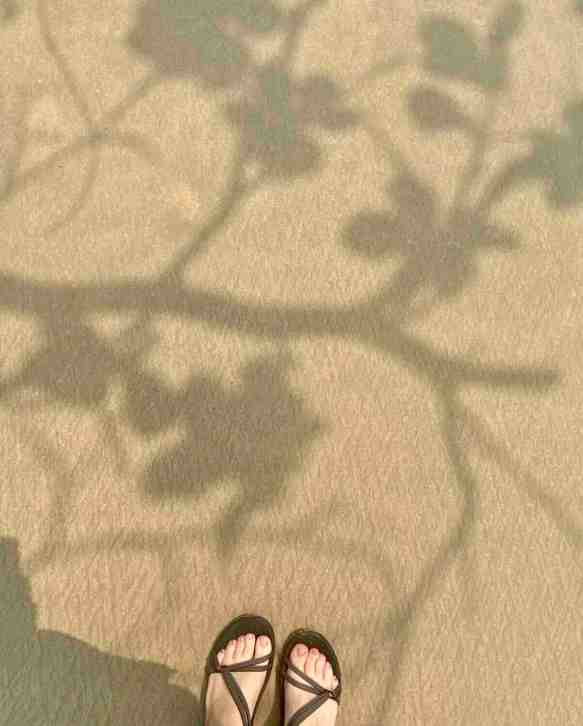
On a separate journey to the south of France, Brad and I marveled at the spectacular architecture of the Mucem in Marseilles and indulged in our first Michelin-starred restaurant, Prieure, in Avignon, which was everything we’d hoped for. But it was the stunning fields of poppies, a surprising parade of sheep in Provence, and the pretty shadows cast by the Plane trees arching over the road that we talk about most- the “asides” of our trip.

And after settling in back in Libreville, we were elated at the first passion fruit growing on the vine Ramsay planted months ago- one of those bits of magic in the before-and-afters that lingers.

May you seek joy, too, in the liminal spaces,

With love, Tracy

Going Off The Grid

I got a wild hair. Perhaps because I was asking our young son to be brave about boarding school, I wanted to do something brave, too. So, I signed up for a rustic, four-day yoga retreat in a remote African rainforest with a group of strangers.
The retreat leaflet provided little information- just the words “Sharabi Village” with a few pictures of a brown lake and four wooden structures: a one-story lodging cabin, an eating area, an open-air yoga platform, and a shared shower/bathroom building. We six yogis were told by Ananda, the yoga instructor and owner of Sharabi Village (population: 12) that the trip would take about four hours by boat and car. He asked us to bring a bathing suit and bug spray. The retreat would be in French and the meals would be vegetarian.

A few days beforehand, I looked up directions to Sharabi Village in Google Maps, which responded, “can’t find a way there.” I nearly bailed, but met a new embassy friend who said she’d go, too. We’d attended one yoga class together then paid in cash for an experience called, simply, “stage d’eau,” or “water internship.”

Life near the equator is always warm, but on the morning of departure, the heat was unusually intense. I climbed into the cab of a pick up truck, wondering if I’d made a huge mistake. My friend and I sat quietly in the back seat and watched Libreville fade into the review mirror. My cell phone tracked us on GPS for only the first 40 kilometers, then we fell off the grid. Pavement gave way to gutted earthen roads that kicked up dust the color of fire. Store fronts ceased, replaced by sporadic market stalls. Palm and banana trees dotted the rural landscape and a young boy walked along the roadside, arms weighed down by jugs of water.

Two hours into the journey, we stopped to refuel the two vehicles (and find bushes for the loo). Back at the truck, I was offered something dark and round from a plastic bag. We were far from medical help and I was skeptical to try it. “Nut,” I was told. I scraped it with my front teeth to look inside. It was a raw almond, softer in texture than ones I’ve tasted. “Thank you for trusting me,” Ananda said. I prayed my intuition was serving me well to do so.

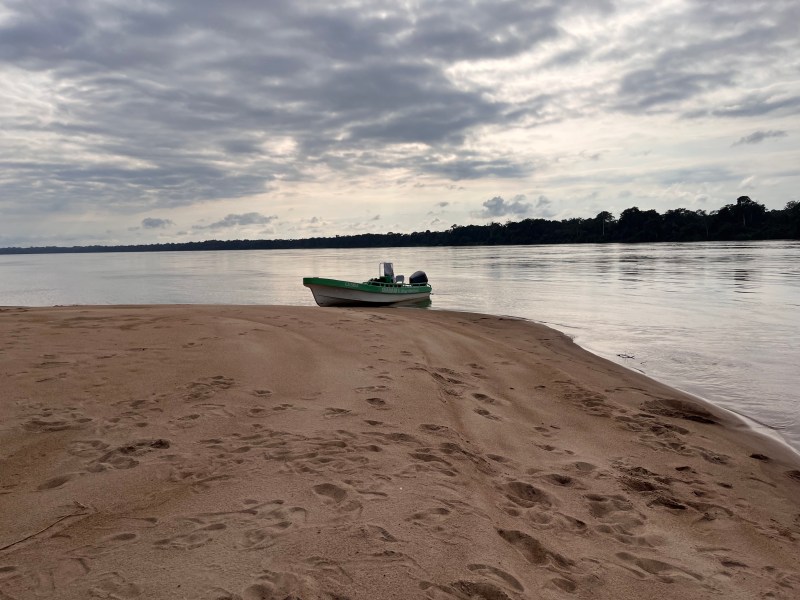
In the town of Bifoun, we exited the truck with our bags and boarded a boat. Our fellow Gabonese yogis threw coins into the river as an offering. One poured juice over both sides of the boat for good luck. Our interaction with water had begun. The breeze was a magnificent reprieve from the heat- that is, until we docked at the edge of Lake Ayem and a thick cloud of mosquitoes and humidity enveloped us. It was hotter than any August afternoon in south Georgia I could remember, and I expressed silent gratitude for my straw hat and anti-malaria meds. “Bonne Arrivee,” Ananda said. Happy Arrival.

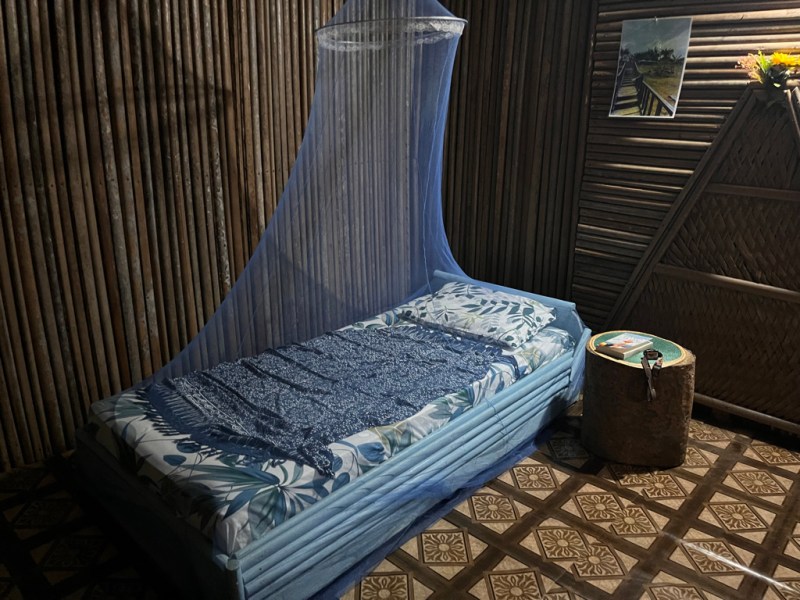
I chose one of the wooden doors along a long corridor and put my backpack down in a room. There was a single bed with a fitted sheet and a mosquito net, one small screened window, and no moving air. The tin roof created a greenhouse effect like a pressure cooker and I was pretty sure I was going to have dig really deep to endure this. Adding to the doubt were flying and biting critters in my room, undeterred by my 40% Deet bug spray. I swiped at something crawling on my upper arm then realized it was just my own beads of sweat. Please let it cool down, I begged the universe as perspiration from my forehead dripped into my left eye.

For the third time, I checked my phone and had no service. There would be no calling Brad to come get me, (not that anyone would know the many road off-shoots and river turns to get here). We had a few hours free. It was too hot to read in my room. I considered showering, but then I’d just be hot and wet and have to reapply bug spray. I sighed loudly, resigned that I’d be permanently pink and sticky all weekend. Better to make the most of it. I grabbed my journal, a pen, and headed for a hammock outside.

This gentler, prettier part of Gabon started to work its magic. A monarch butterfly danced by. I turned toward exotic bird calls in the trees, spotting toucans and grey and red parrots. Ananda walked up. “Take off your shoes and feel the earth. Empty your thoughts, Tracy. The novel you wish to write comes from spirit, not from the mind. Put down your book and take a walk instead,” he instructed, pointing to the forest. Begrudgingly, I did so.

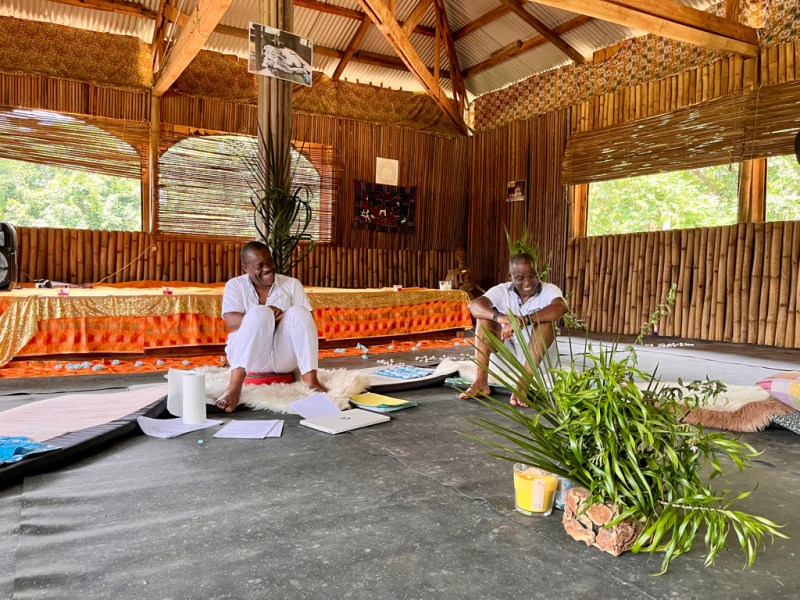
At 5pm, an old-fashioned fire bell rang outside the wooden structure for yoga. Banana leaves covered the dirt before the stairs. The word EAU was written in stones on the entrance floor. Ananda played Sanskrit music as we got centered on our mats. I sat cross-legged and wiped a slick sheen from my face, then lower back, pushing away my strong desire for air conditioning.

“Respire. Relache,” (Breathe. Release,) Ananda said, kicking off our ninety minutes of yoga and meditation in French. I quietly translated for my friend. Mostly, we just copied Ananda’s graceful movements meant to open our chakras, raise our frequencies, and regenerate fresh energy. At the end of the session, we formed a circle and passed around an obsidian sphere. One by one, we held the black stone and shared what we were grateful for. As we were dismissed, generators provided lights in the bathroom building and in our rooms for a couple of hours.

The stream of cold water in the shower felt amazing after its initial shock. More surprising was a snail, the size of a conch shell, that appeared on the path back to my room during my four-minute rinse. It looked like a character from Alice in Wonderland and I watched it slither away in awe.

By the time the dinner bell sounded, I’d worked up an appetite. Like a little kid, I plodded barefoot across the property and was the first to arrive in the dining area, waiting and willing the others to show up. We politely served ourselves from the long buffet table, sampling dishes of button mushrooms in tomato sauce, sauteed sorrel, fried potatoes, assorted fruit, pasta salad, and hunks of bread, (while avoiding the sugar ants marching across the rim of the dishes). Drinks were hot tea, water, or “bisap,” a sweet, cold hibiscus drink that reminded me of Cairo.

We dispersed to tables and chatted briefly. The food was delicious and plentiful. (Unsure of what to expect, I’d packed granola bars, but never ate them). After dinner, we returned to the enchanting open-air yoga space where candles had been lit. Ananda spoke of a Japanese man named Emoto who’d experimented with speaking loving and unkind words over separate bowls of water. Under a microscope, the loving water crystals stayed clear and the water crystals that received ugly terms were murky. We then each drew a circle on blank paper and wrote our desires inside. We filled glasses of water, placed them on top of our circles, then meditated over the water with positivity. Afterward, we were asked to wake in silence at 5am the next morning to reconvene for meditation. There would be no talking before breakfast. (We carried our glasses of water like a pet to and from our rooms for each yoga session and told not to drink it- yet).

Some time after 9 p.m., although darkness had fallen, the temperature in my room had not. I peeled off the clothes clinging to me with perspiration and lay under the mosquito net, listening to the night sounds. Frogs and crickets echoed outside. Inside, flies buzzed, mice chattered in the wooden beams, and someone snored in the next room through the thin wooden wall. I read with a flashlight, too tired to be agitated by the heat, and eventually slipped into slumber.

At 4:50am, the gong sounded and the day began. For some reason it hadn’t really registered for me that at a yoga retreat, I’d be doing yoga and meditation for several hours a day- before breakfast, before lunch, and dinner. By the end of day two, I’d memorized many of the songs in Sanksrit and my whole body was sore (but also relaxed).

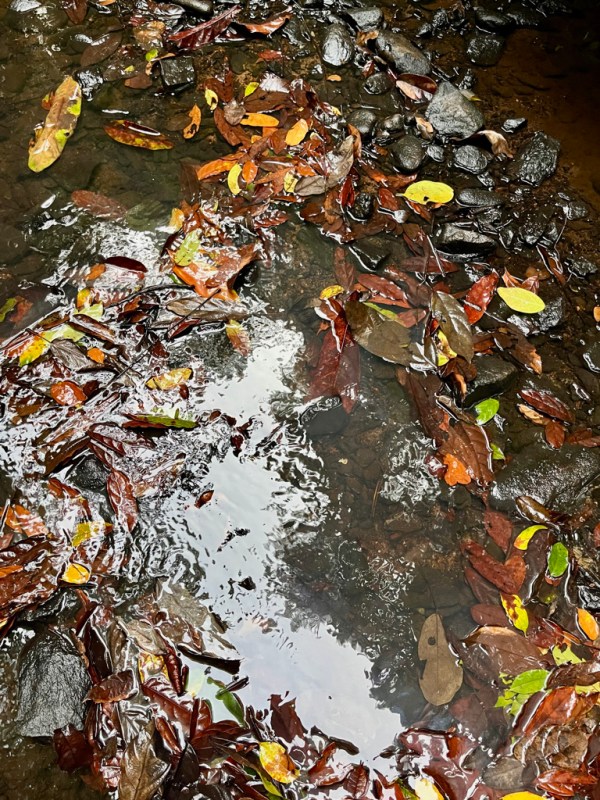
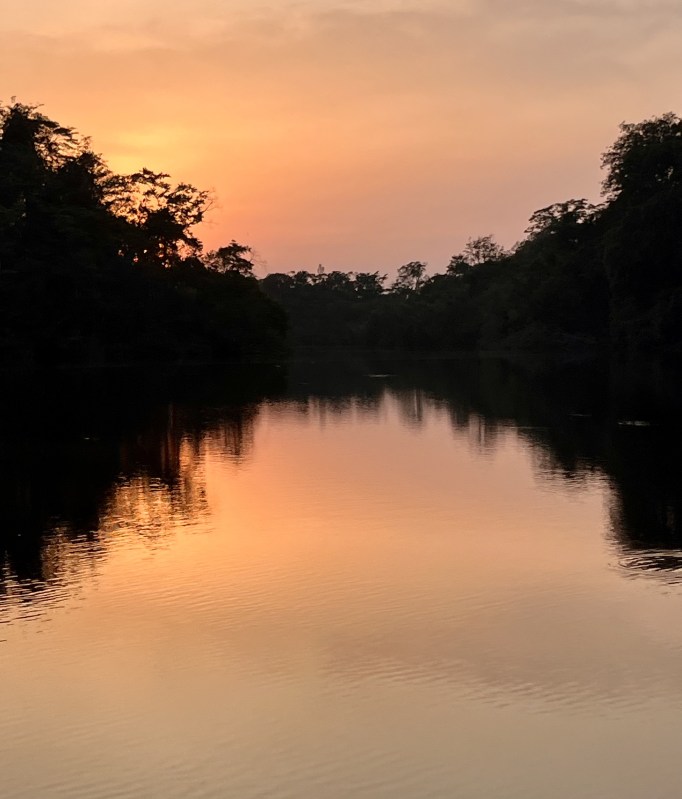
Over the next two days, we chanted at a miracle tree, washed dishes and swept the floors as we meditated, swam in a velvety, cold river, released fears and negativity into a vessel of water which we poured out. We gave offerings to the forest and hiked through dense, slippery underbrush behind a guide who cut a path with a machete. We learned how much bites of “fourmis,” African fire ants, hurt, and how thick mud can suction your shoes right off. We spoke our desires into a waterfall and took a boat ride back to the village under the stunning tangerine glow of sunset.

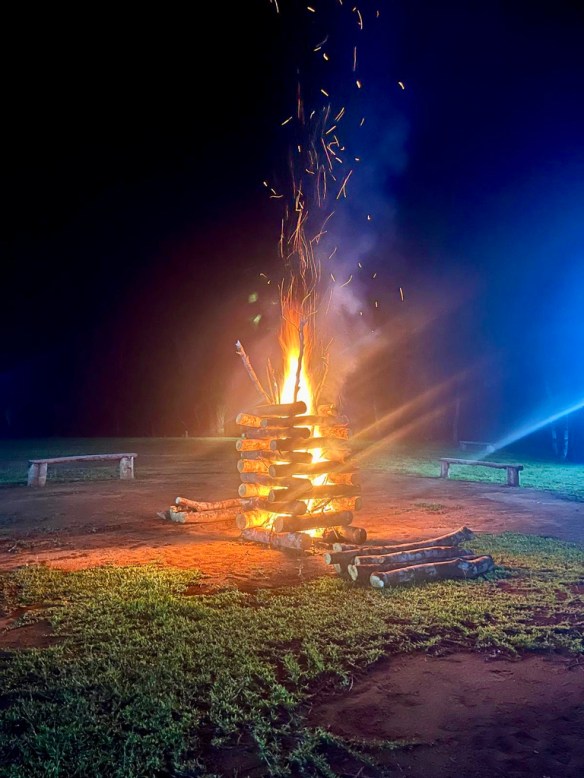
After unblocking our channels and raising vibrations, I felt my mind quieting, my pace slowing, and my strength and patience growing. In a closing ritual, we drank our glasses of water that we’d meditated over to ingest our written desires. We then burned the papers in a bonfire and watched luminous embers rise into the sky.

Those four days were the hottest I’d ever been, but what started off as almost a dare to myself-to be brave and get outside my comfort zone-became an important few days of self-care. After the hours of reflection, exercise, connection to nature and spirit, simple meals, and the detox from technology, I left the yoga retreat feeling fluid in my limbs, truly peaceful, and deeply content. My French had improved and I slept better those first several nights home than I had in years.

Sat Nam,

-Tracy