Collins Dictionary describes non-linear as “Does not progress smoothly from one stage to the next in a logical way…makes sudden changes or goes in different directions at the same time.”
Most days, we thrive on our non-linear, unpredictable Foreign Service journey, but It’s “PCS” season in the diplomatic community here, which stands for Permanent Change of Station, and I’m wishing for a smooth transition, especially as a U.S. federal government family in the current political climate. While bidding for our next assignment these last few months, we thought briefly our family might be moving to Turkey, then chances were good for Prague (for which I was pining), however, now we will land in DC this summer for two years.
After more than a decade abroad in Swaziland, Cairo, Honduras, and Gabon, the best part of repatriation will be the proximity to friends and family, especially, reuniting with our son who left for boarding school one and a half years ago after a military coup. We’ve had holidays and breaks together, but in between, contact has mostly been via video chats and I cannot wait for us to be back under one roof as a family.
Returning to America, we know to expect some reverse culture shock and necessary adaptations. Focusing on the positive, there is the anticipation of choosing which property we get to live in, a change of seasons (sweaters and boots!), drinking water from the tap, smooth roads accompanied by (mostly) civil driving rules, ample electricity and countless conveniences, like quick trips to the store without hunting for ingredients, browsing the library for a book in english, and the instant gratification of finding the essentials without much hassle.
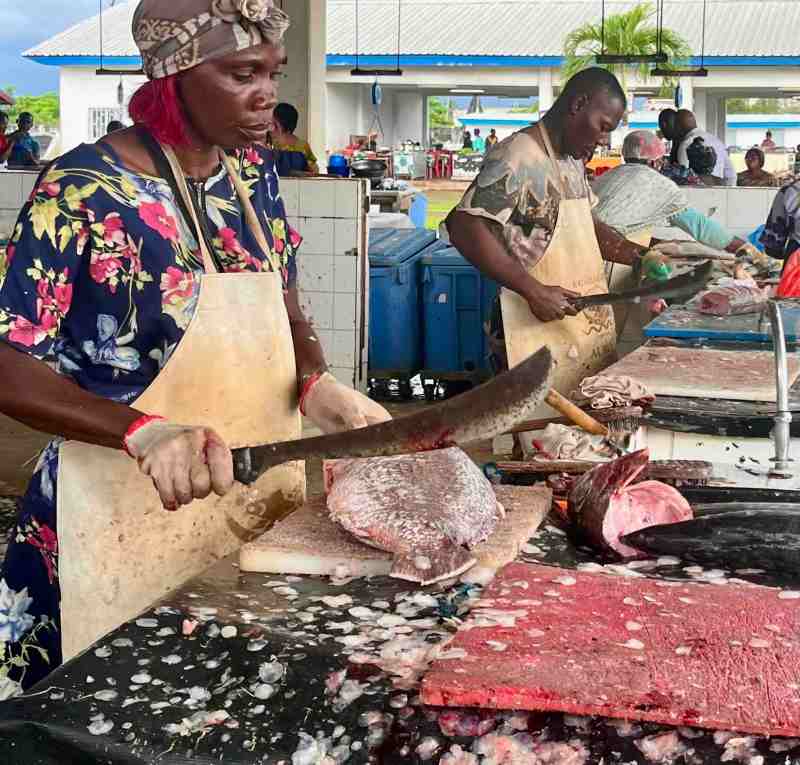
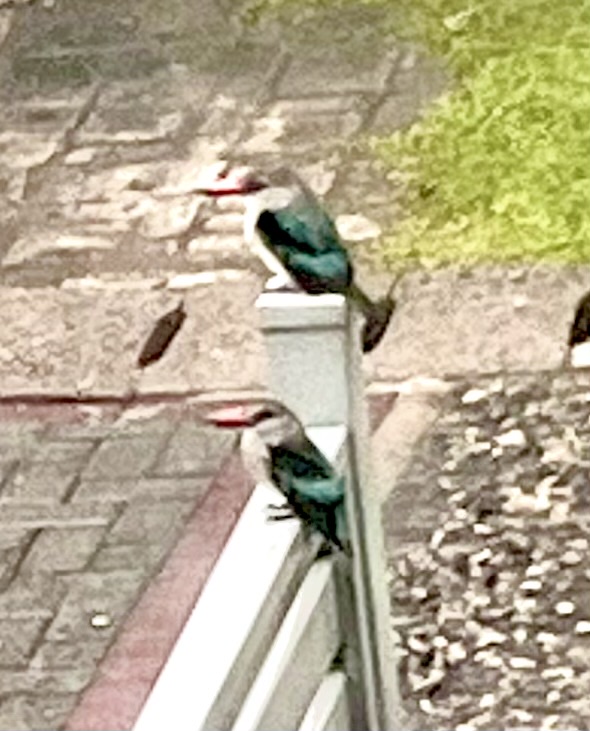
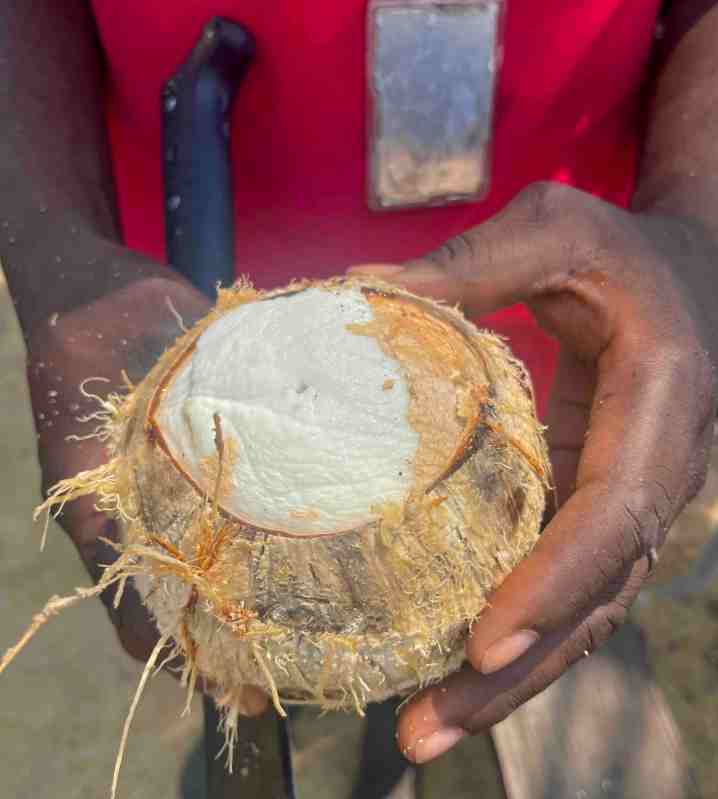
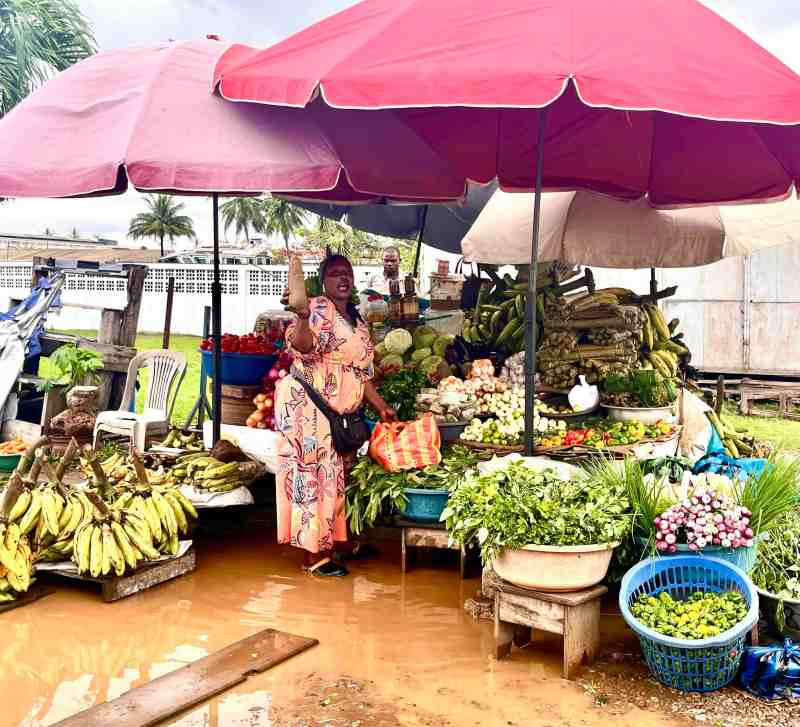
But, how I will miss our dear friends, conversing in foreign languages, and the rich cultural experiences and adventurous travel. I will miss buying produce and fish from the source and the unexpected gestures of kindness, like the gardener gifting me a fresh coconut. And the stunning beauty of fiery sunsets near the equator, watching storms roll in next to Kingfishers perched on our fence, and the wild vibrancy of our surroundings.
I’ll even miss the frequent life lessons that come fast and hard in developing countries, challenging us to find solutions without the resources and tools we’re accustomed to; at times living with instability and even fear, operating far beyond our comfort zones. Learning to do without and living on less. And the important, constant reminders that as Americans how fortunate we are to have access to clean water and air, sturdy living quarters, stable food sources, education, accessible healthcare and the protection of human rights – all of which far outweigh what we’ve witnessed in Central America and Africa. (Unlike what the show “The Diplomat” portrays, our life is a lot more grit than glamour).
Out of necessity, I’ve reinvented myself in each of these foreign lands. Through building community and a life for our family, one hurdle at a time, I’ve grown emotionally stronger, braver, and more self-assured. Since I’ve been unable to consult overseas in my field (illicit finance, deemed a conflict of interest with my husband’s job), I’ve shifted to writing, public speaking, developing a deep spiritual relationship with nature, and cultivating a quieter lifestyle.
Repatriation will take resilience and patience. We’ll need to find a car, rent a home, register for school, and furnish a house- parts of which will come to us in stages: a few hundred pounds of household effects (clothes, linens, kitchen utensils and things needed sooner than later) from Gabon will arrive by plane, followed by crates full of carpets, furniture, and goods that will make a longer journey by cargo ship.
Back on American soil, I’ll be interested to see who I will I become. I’m secretly afraid I’ll lose my wilder spirit–that it might get buried or swallowed up by box stores instead of roadside markets, or by the ease of days spent mostly indoors and without having to tap into bravery and daring. But I imagine although our lifestyle stateside will likely be faster-paced, it will also be more even-keeled, safer, and less like living in survival mode.
As a more relaxed mama with our child at home, perhaps I’ll once again sleep through the night. And, after a long hiatus in my career, I’ll navigate reentry into the work place in a way that feels meaningful. It might take a while, but the house will come together–quirky as it may be–and we’ll start 8th grade and new jobs, discover new friends, activities, and spaces to explore. Also, after grieving the recent loss of our sweet Golden Retriever, “Biscuit,” we’ve promised our son we’ll consider becoming dog owners again once we’re settled.
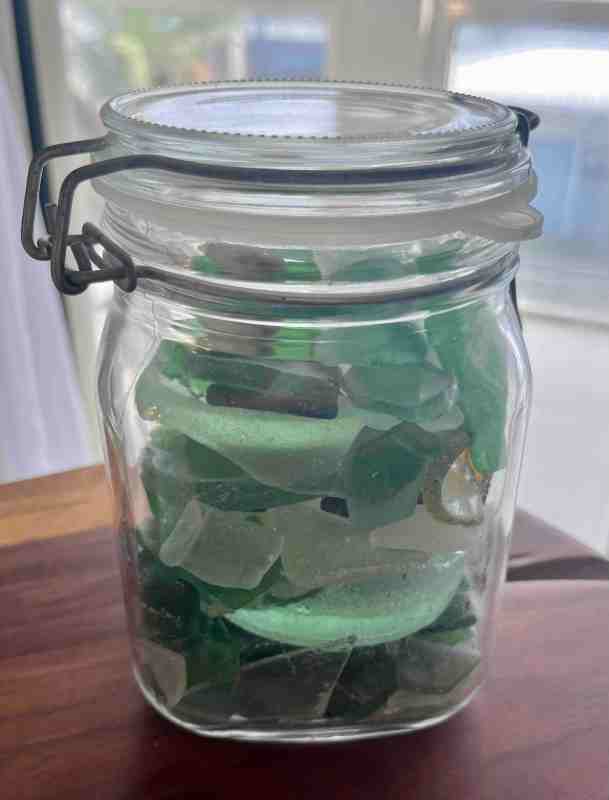
On this new journey home, to blend the past with the present, we’ll bring along talismans collected during our time abroad— local art, sea glass, shells, and feathers– all imbued with moments we’ll cherish.
Cheers to “fair winds and following seas.” We hope you’ll come visit us next fall in Arlington and create new memories with us.
Dear readers, apologies for my radio silence. Truthfully, I’ve needed time to process some lifestyle changes, but don’t worry, there’s a happy ending (and lots of photos with smiles below- keep reading). Have a seat on my virtual soul sofa and I’ll fill you in.
30 August, my son Ramsay and I were due to return from Atlanta to Gabon after summer break. I was sound asleep at my mother’s house when the phone rang in the middle of the night. Unknown Number from Washington, D.C.
“Press 1 if you are safe,” the State Department computer call said.
I did so, and then the line went dead.
My pulse raced. If the government was accounting for the Americans posted to Libreville, something had gone awry- and my husband, head of security for the American Embassy in Gabon, would be in the thick of whatever emergency was happening. Presidential elections had been held a few days earlier. My last update was that officials were still counting the votes. I texted and emailed Brad. It was five a.m. in Africa. I knew he’d be awake, preparing for potential unrest after the results were announced.
Half an hour passed. No response. An hour. No response. I tried his work number. I messaged every app, including Facebook, which he never checked, but just in case… still nothing. I texted friends in Libreville with young children, who’d be up, bleary-eyed, having coffee. Not a word…from anyone. Panic set in. Unbeknownst to me, Gabon had gone dark: no internet, no cell service.
Forty minutes later, a message pinged my cell from Air France, “Time to Check-In for Your Flight.” My intuition told me I wouldn’t be needing that boarding pass. I ignored the message, wondering how close to takeoff I could cancel.
Another Unknown Number rang. I gripped the phone, then sighed with relief. It was Brad- on a satellite call. He was safe at the embassy, as were all mission personnel. There’d been a military takeover in the early morning hours with gunfire, but so far, no fatalities reported. The Bongo family’s reign, toppled after half a century… would there be a counter-coup? Gabon was on tenterhooks. Curfews were imposed.
“There are reports the borders are closing. Stay in the States until I know more,” my husband instructed. “I’ll check in as soon as I can. Gotta go. I love you.” He hung up.
I sat in stunned silence. The words closed borders echoed in my head, reminiscent of Covid. When would we be able to return home- weeks? months? Ramsay and I were no longer on vacation- we were now in exile from our country of residence.
As news unfolded, it was determined there was no longer an adequate school (one held to American standards) for Ramsay to return to in Gabon. I darted to Barnes & Noble to buy a “Summer Bridge” sixth-grade activity book as a loose guide. Ramsay and I began a very haphazard online program that week with me as an unsure teacher.
We were both delighted to ditch it all for an impromptu visit to Disney World and Universal with our cousins. Ramsay had never been, and we needed distraction big time. A few days of roller coasters and wild rides turned out to be the perfect antidote for our churning thoughts.
To our great relief, ten days later, Gabon’s borders re-opened. With suitcases packed and new flights booked, I said to one of Mama’s neighbors, “I might be getting too old for this Foreign Service lifestyle. I crave more stability in our lives.”
“Tracy, most people need more stability than a coup d’etat,” he replied with an amused smile.
Once happily reunited as a family in Libreville (including Biscuit, our Golden Retriever who adores everyone yet retrieves nothing), Brad, Ramsay and I had several serious discussions to chart a new future plan. With a river of tears, we collectively decided the best course of action was to send Ramsay to boarding school.
“The State Department will send you anywhere- England, Europe, South Africa…it’s your choice,” we told our son who’d spent his life overseas. We had to narrow down options quickly. Rams chose America, close to family. We spent weeks virtually touring schools and submitting copious applications. We are proud to report that Ramsay was accepted to his top choice in the U.S. and will start in January 2024.
Outwardly, we celebrated. Inwardly, I fell apart. I expected our only son to leave home at 18, not in the 6th grade. I’ve had big emotions to work through. With Brad’s selfless encouragement, I planned an adventure for Ramsay before his departure from the continent. (Brad wasn’t able to go with us). Zambia seemed to have everything we were looking for; a safe country, abundant wildlife, not too far of a flight, and plenty of magic with stunning Victoria Falls.
On the eve of Halloween, from plane seats 21 A and B, Ramsay and I gazed at billowing cloud formations and the vast earth below. A sense of wonderment I’d been missing returned and I knew we’d made the right decision. “Enjoy your holiday,” the captain announced as we stepped onto the tarmac in Livingstone. Enjoy it, we did. Our ten-day trip was even better than expected. Here are the highlights:
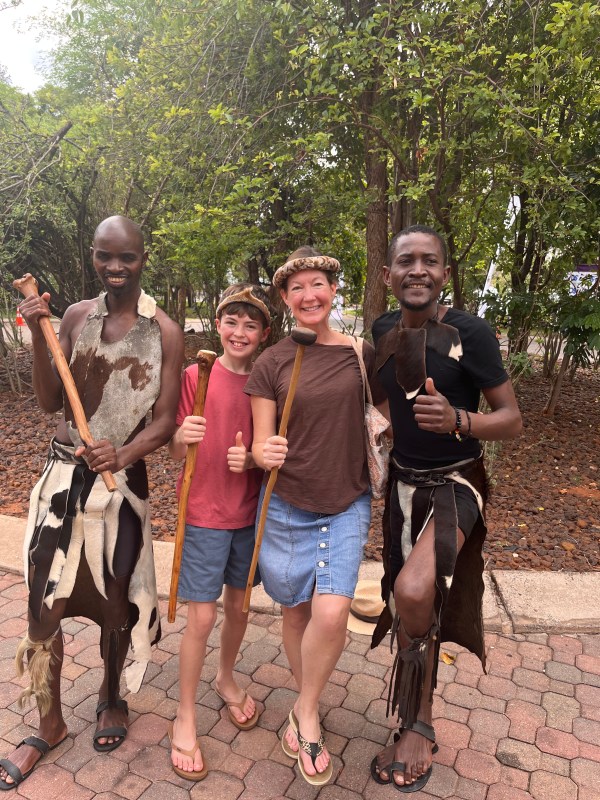
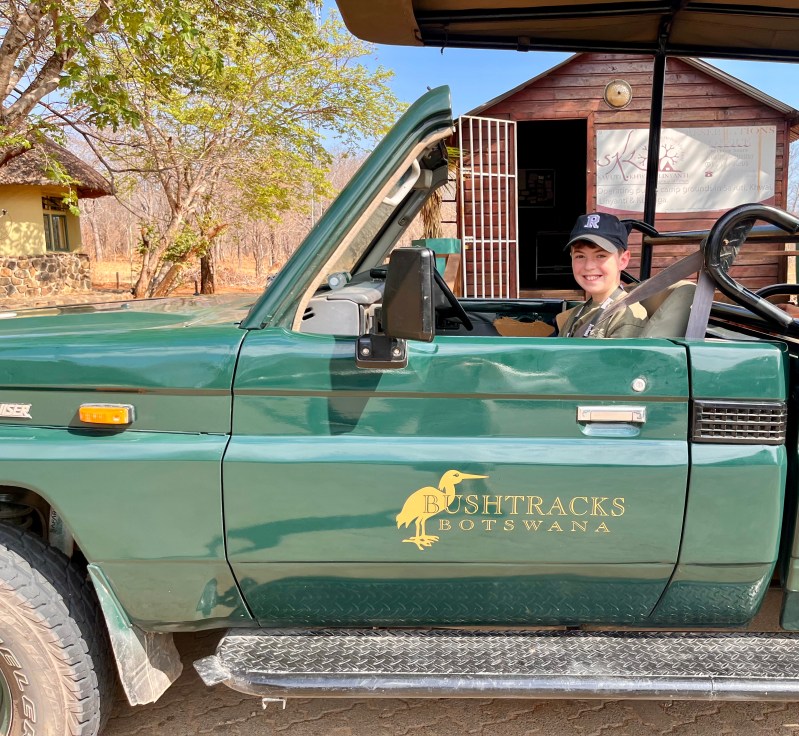
Ramsay loved that our Bushtracks driver from the airport was named Arson, who told us the local currency was called “kwacha.” He showed us a baboon crossing the road on our way to the Avani Hotel, where zebras grazed like horses at the entrance. “Look! The baby zebra’s stripes are brown,” Rams noted. We were greeted by tribesmen who sang and danced outside the lobby.
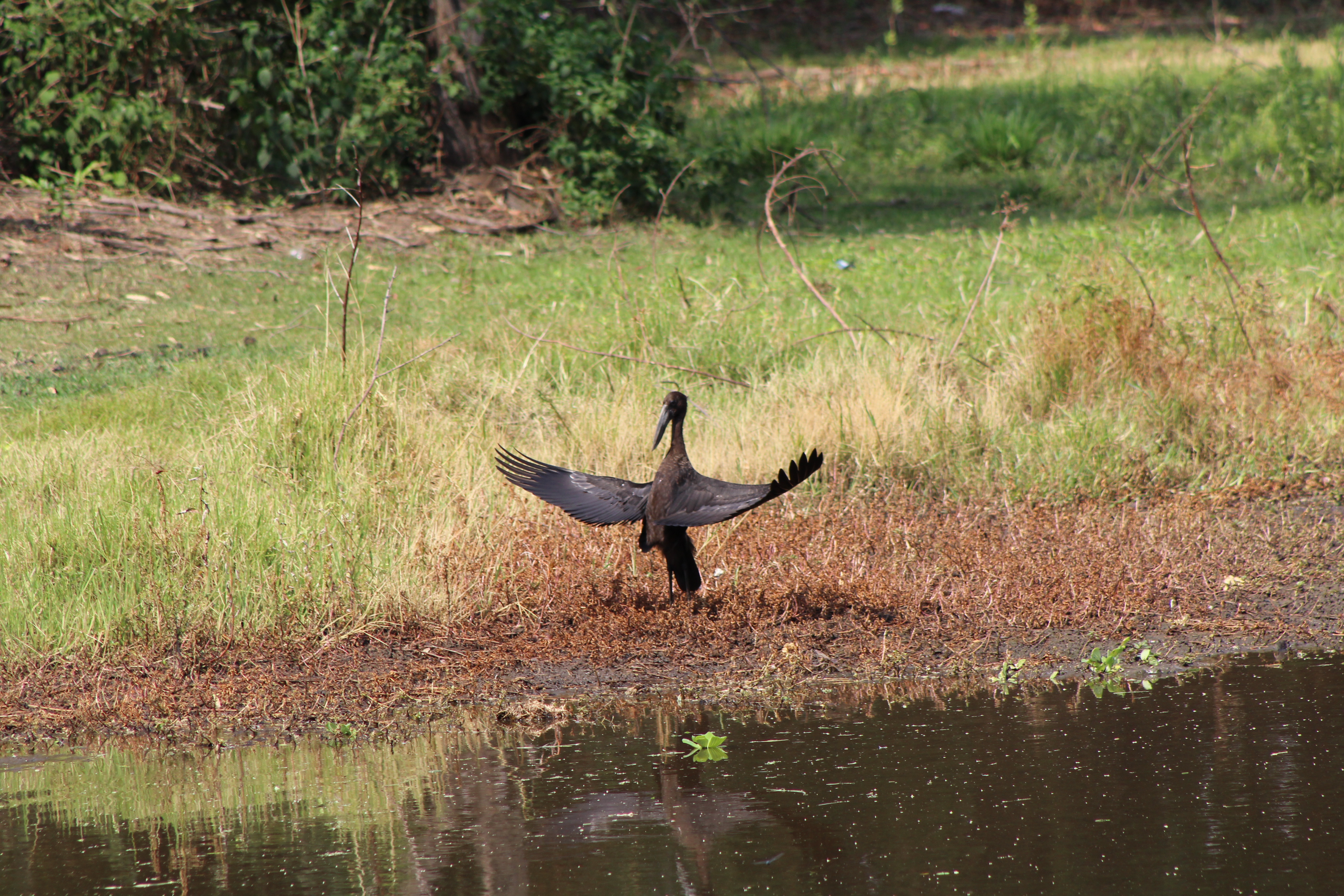
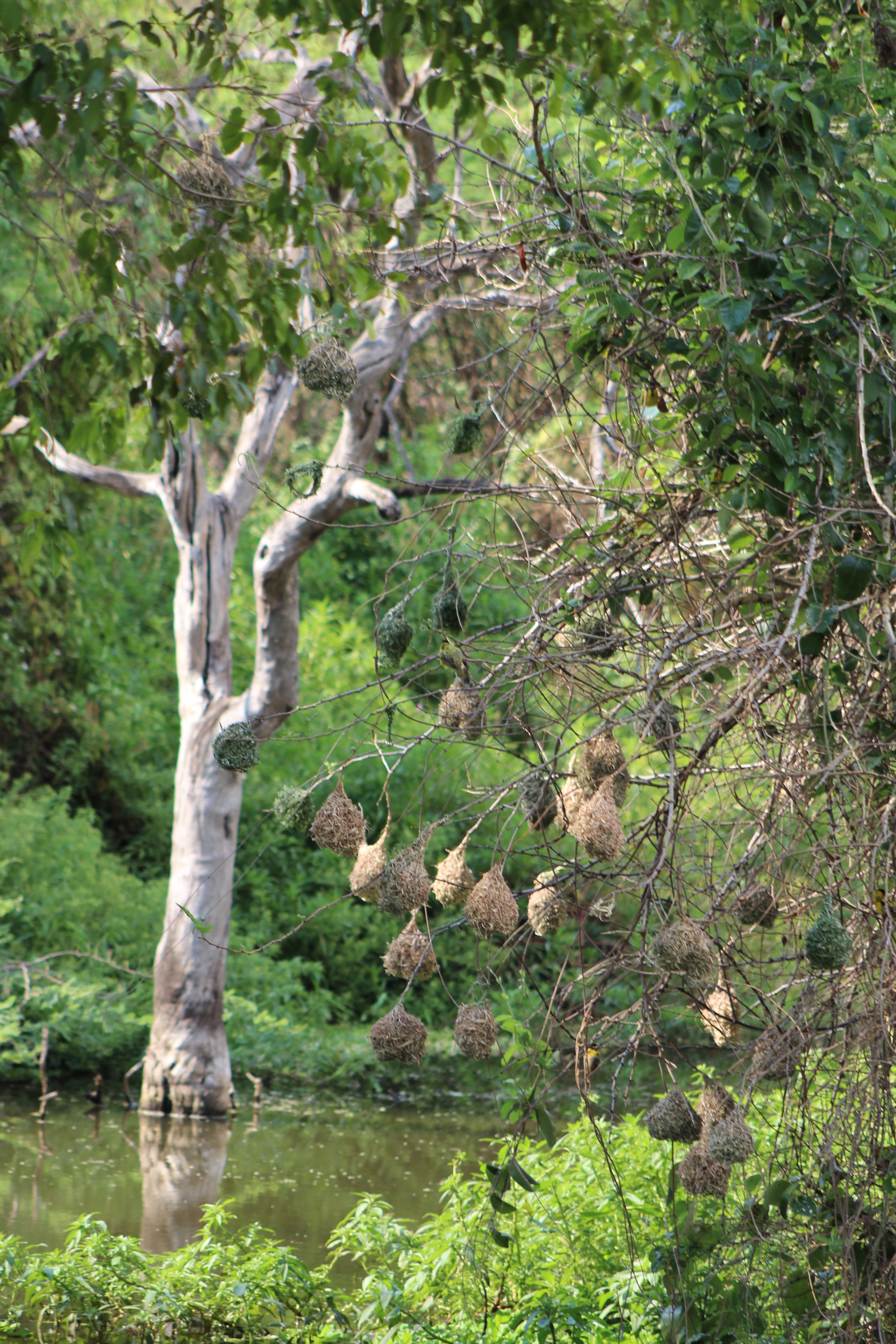
Our room had a view of watery reflections in a pond, where tall birds fished and dried their wings. Popping yellow weaver birds swung on their nests, artfully grouped like a cluster of grapes hanging over the water. A monitor lizard slithered from a rock and a curious monkey peered into our window. Was this place real? Big grins spread across our faces.
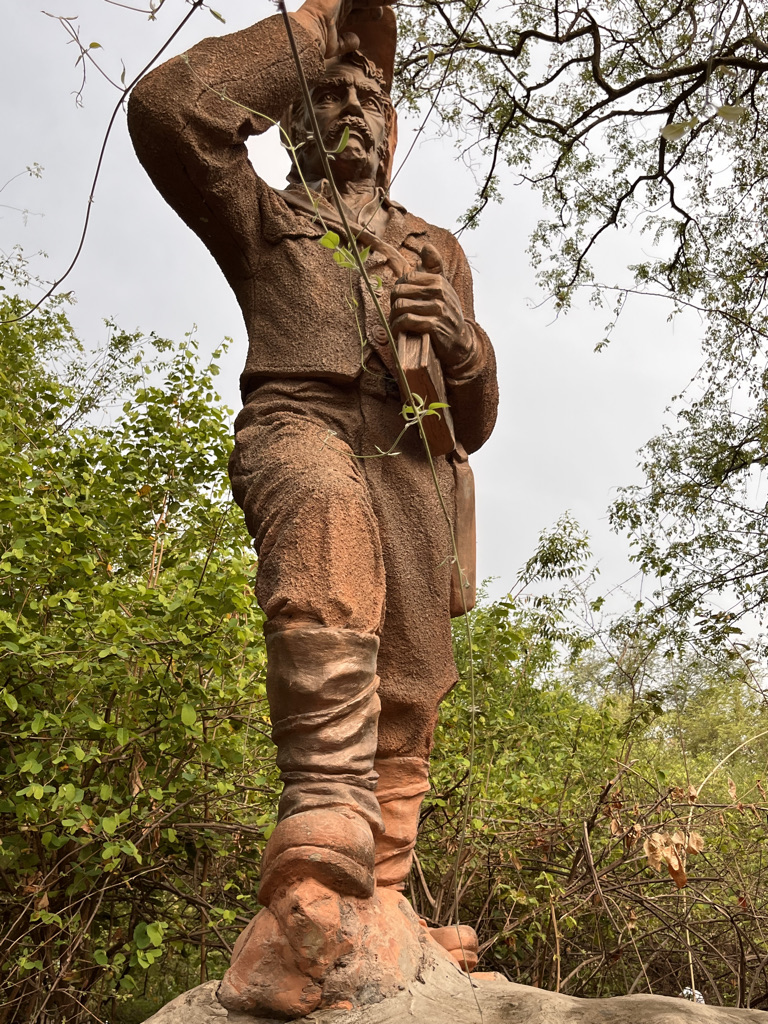
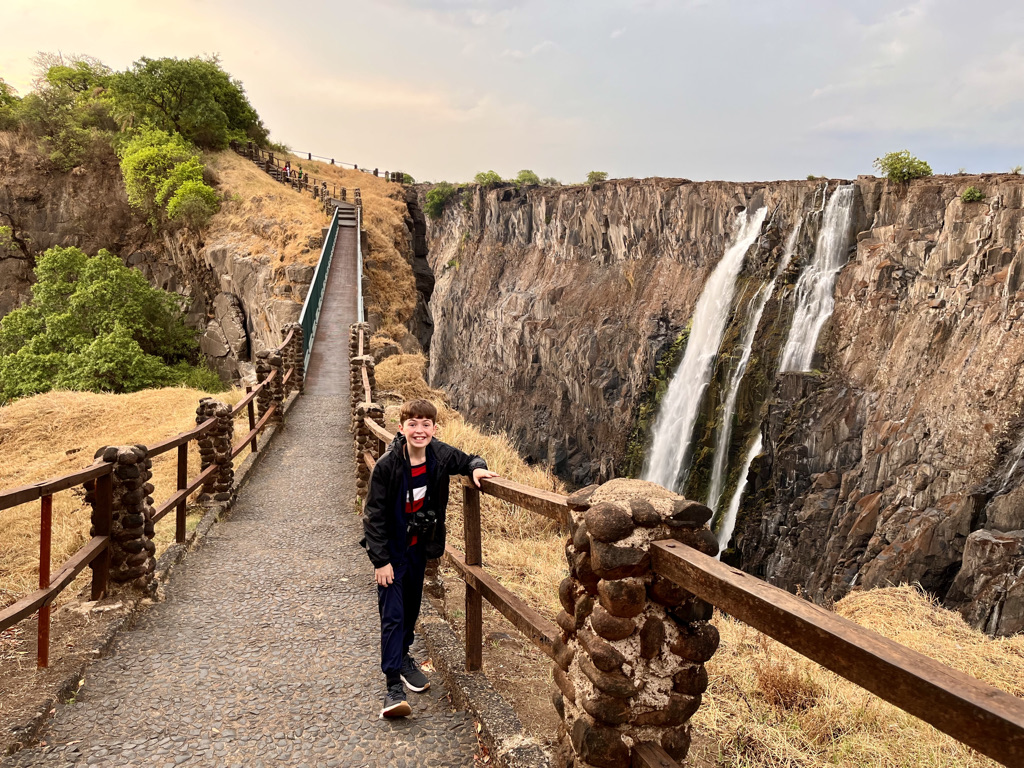
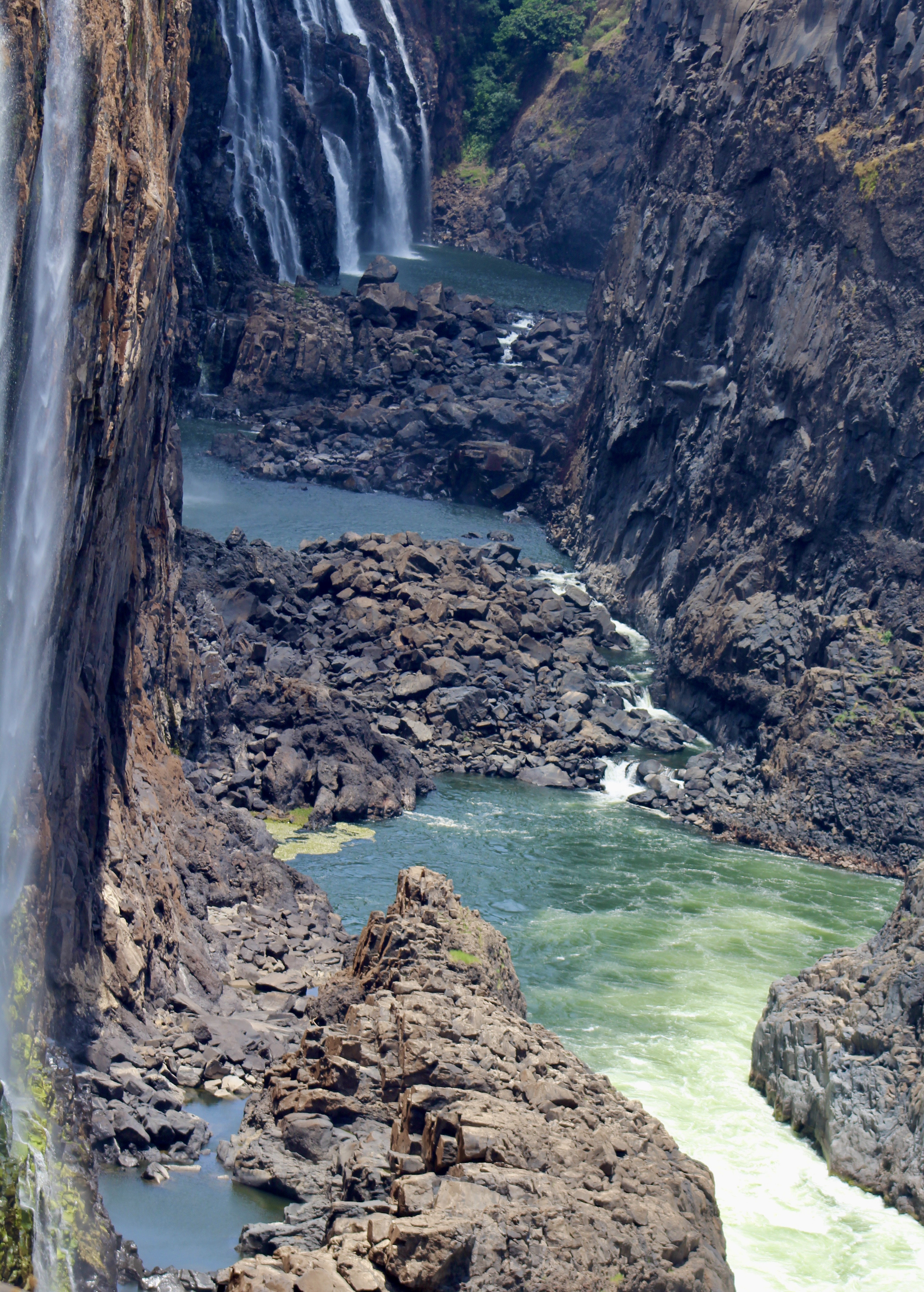
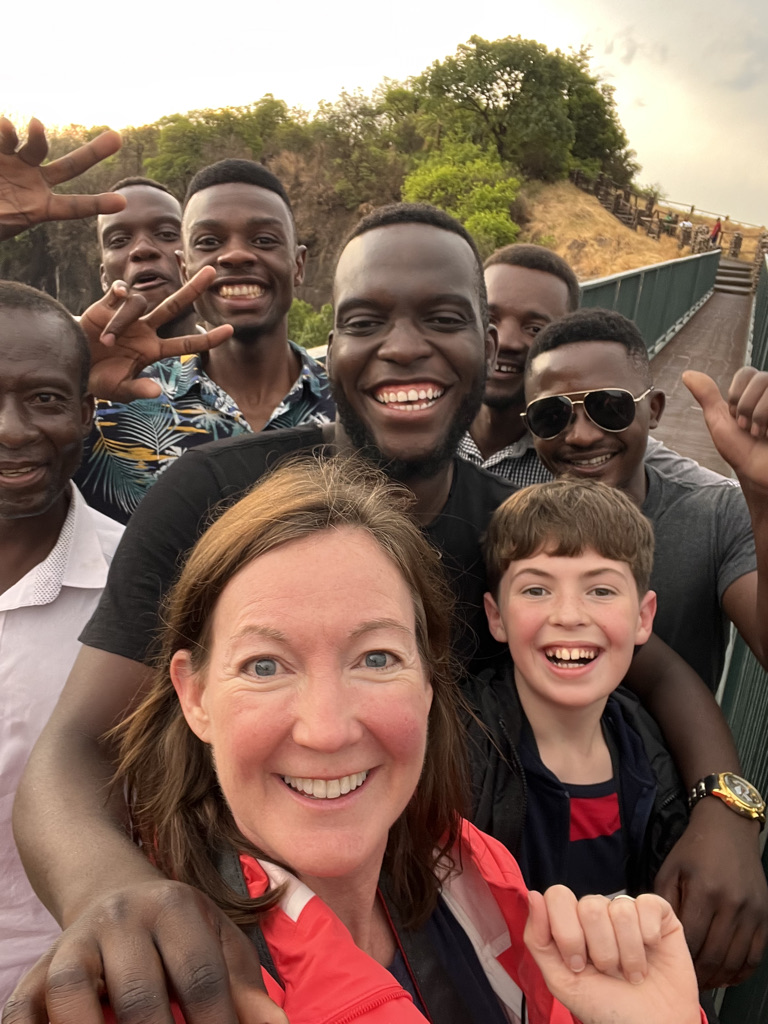
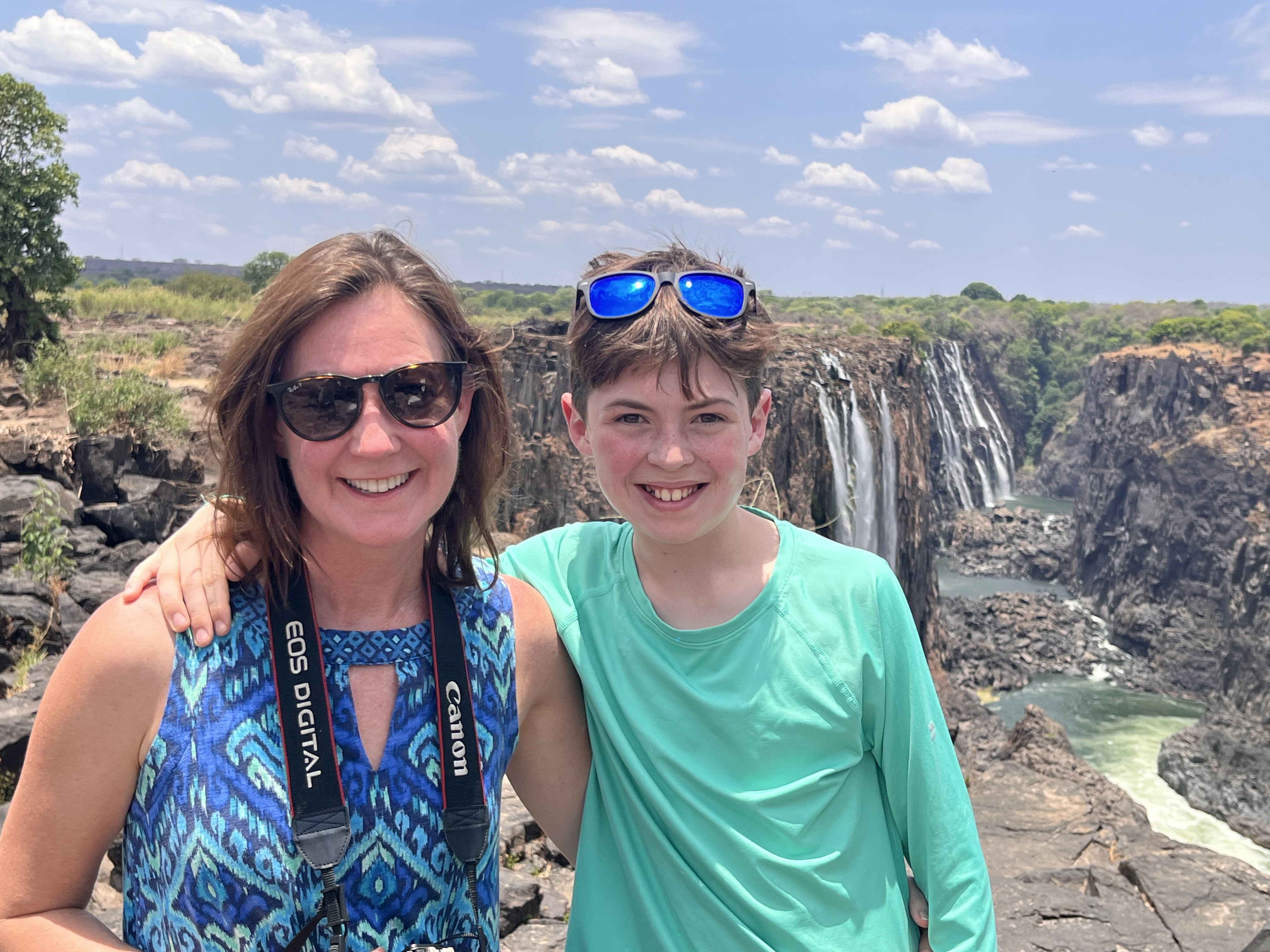
We hastily unpacked. With binoculars and a camera in tow, we walked the 15 minutes to the Falls. The scenery was so vibrant that it felt staged; a giraffe lumbered down our path, along with groups of stately impala. We signed the guest book at the park entrance and paused at a statue of Dr. David Livingstone, the well-known Scottish missionary explorer. Gold grasses and plunging terrain flanked the sides of Knife Bridge on our way to Danger Point, where mist rose from the thunderous waterfall in the distance. It was dry season, exposing large swaths of rock face between the cascades, but still impressive. Local kids asked for selfies gleefully shouting, “Welcome to Zambia!”
On the way to the Elephant Cafe Sanctuary, our jet boat captain imparted, “We’ll be dipping and darting around rapids and rocks for 13 kilometers. I assure you this is not for my entertainment- I’ve lost a few propellers over the years. Hold on.”
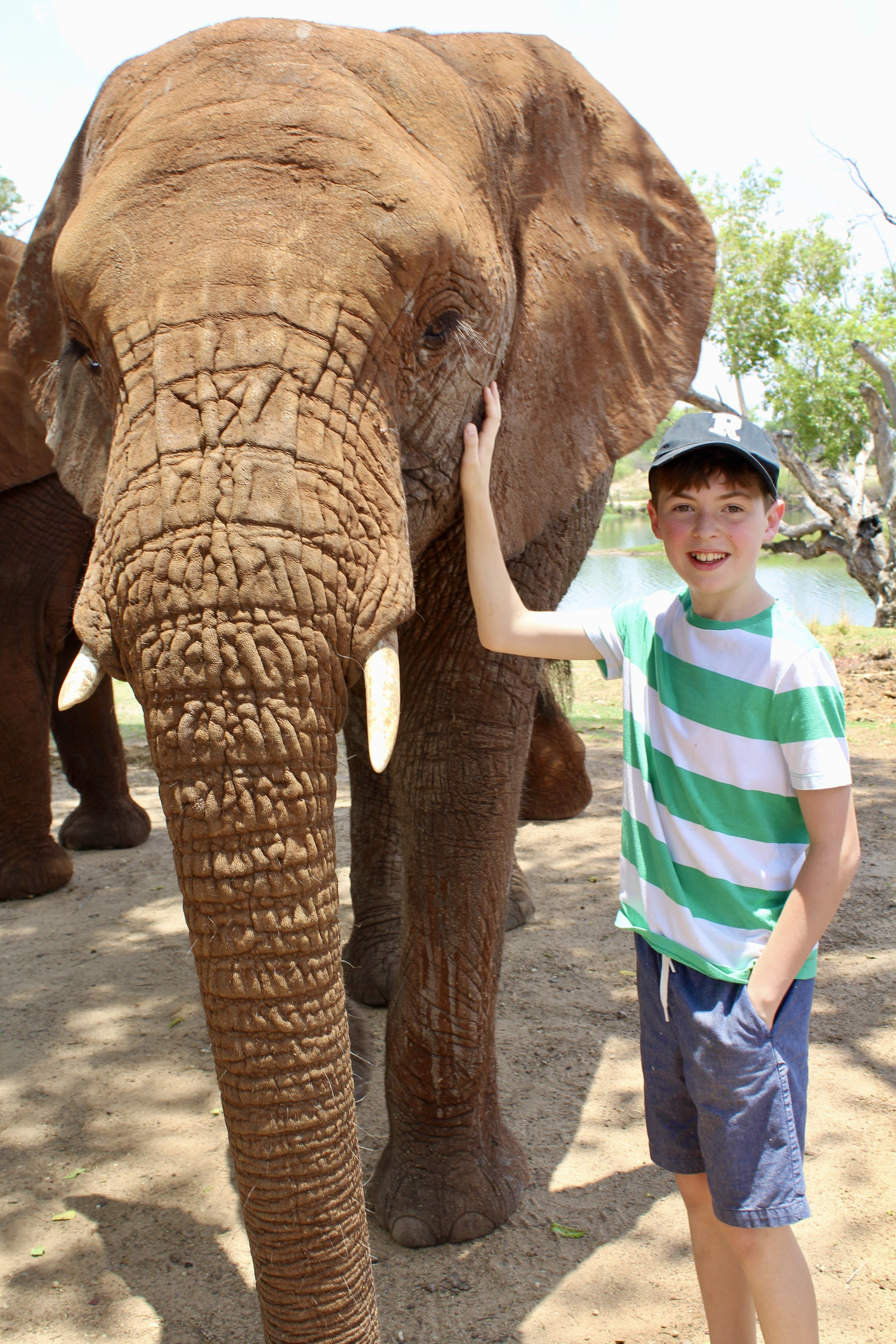
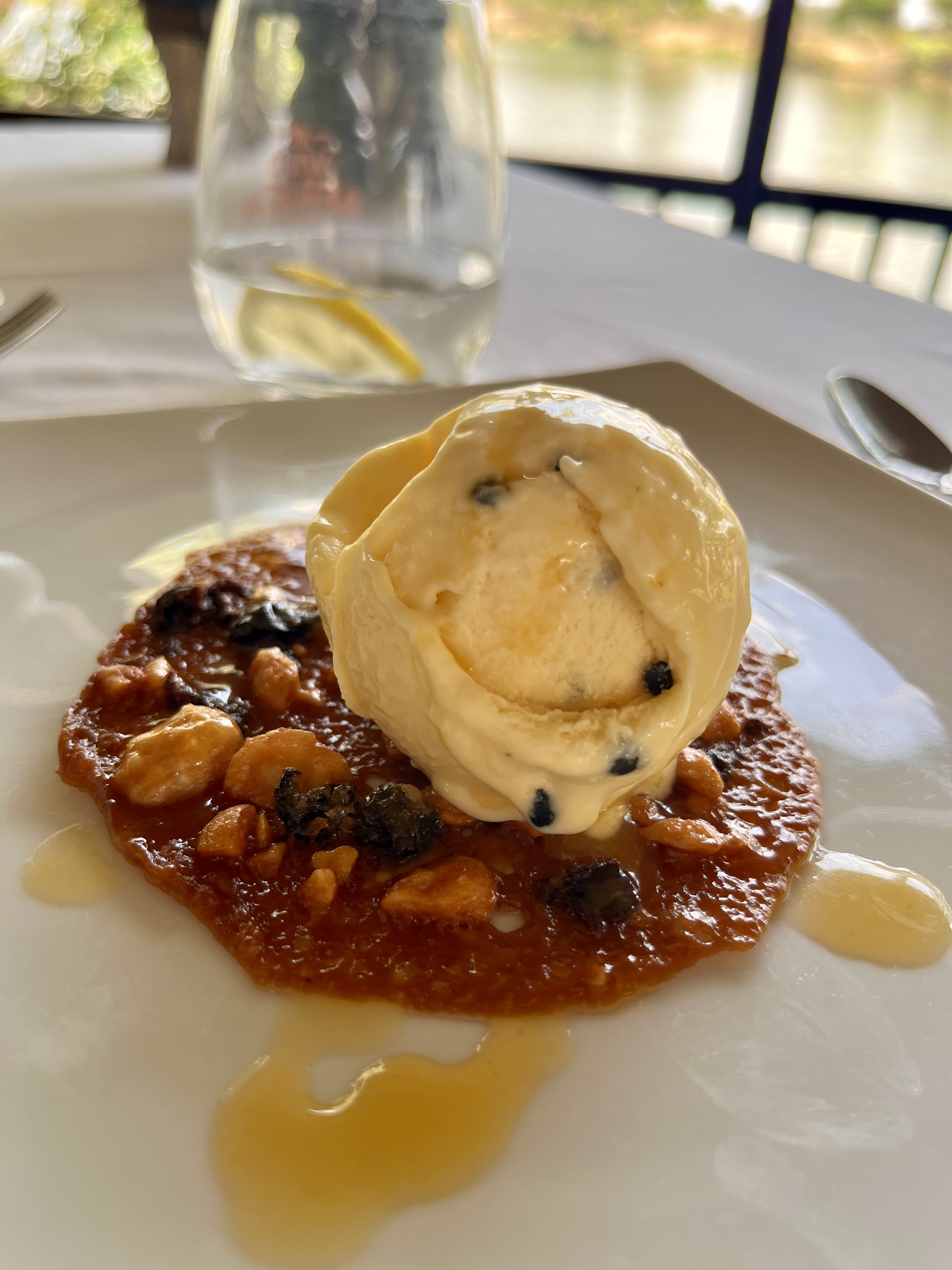
“They look soft, but their skin is like rough wood, with prickly hair,” Ramsay observed as we fed snacks to three orphaned elephants. After a good hand sanitizing, we ate one of my favorite meals on the trip: cold bell pepper soup with tamarind coulis and edible flowers, river bream infused with coconut and tarragon, sauteed zucchini and carrots, and a rice medley with chopped pistachios, raisins, and fresh mango. For dessert: passion fruit ice cream with a caramelized hazelnut wafer. “Mom, watch that bum-ble bee.” I didn’t get the emphasis at first until I saw a bee zipping into the backside of a wooden elephant statue on the table. Ramsay cracked himself up in a way that only an eleven-year-old can. I was in stitches.
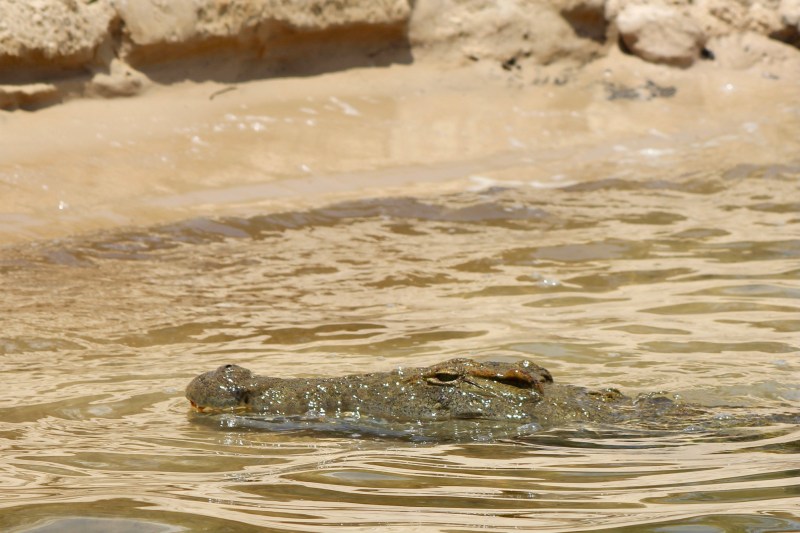
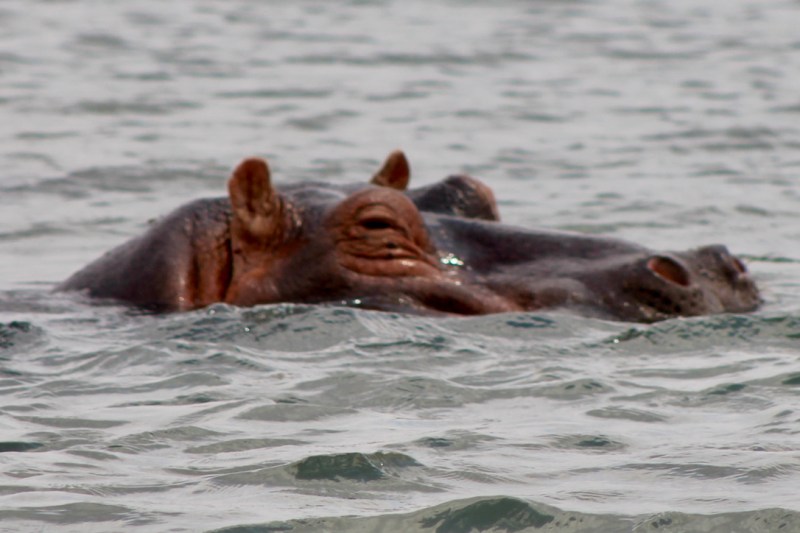
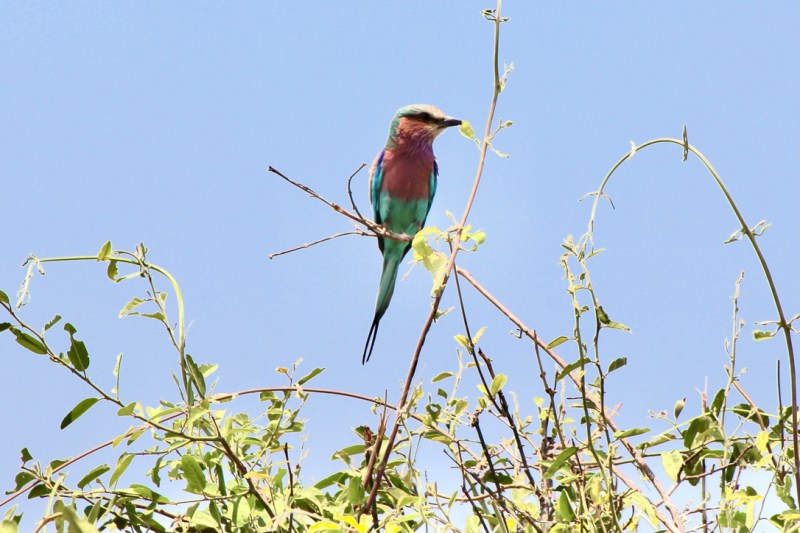
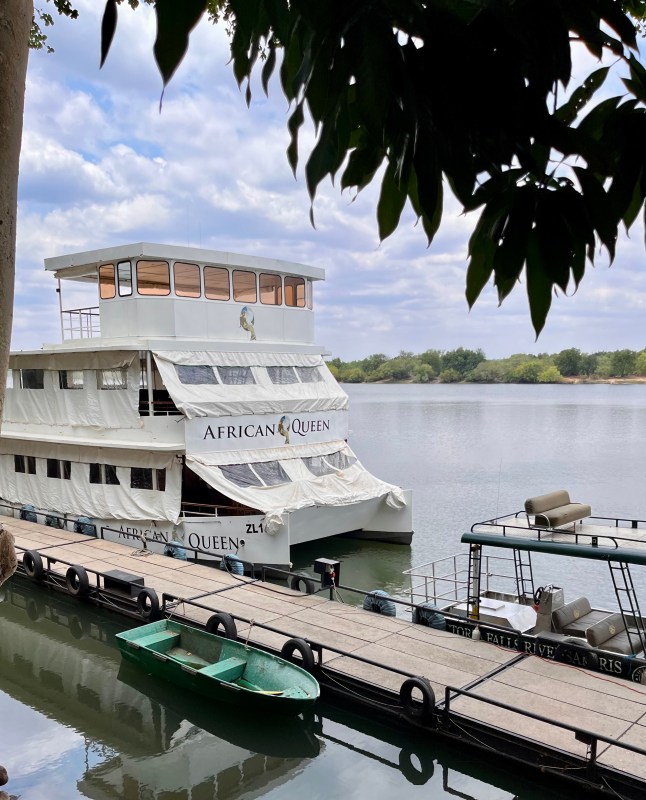
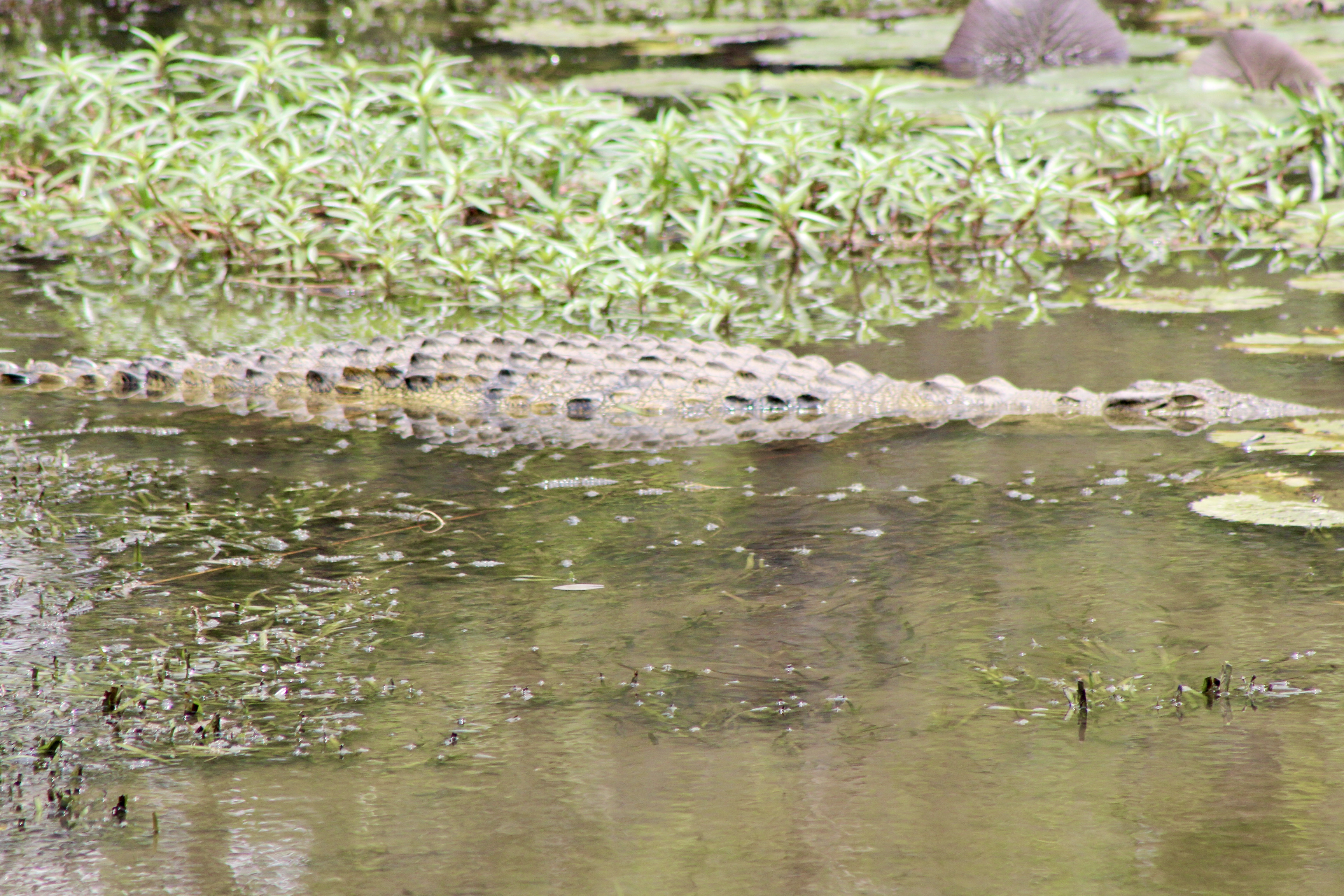
A few days later, on the Zambesi, our boat docked next to the African Queen (likely not the original from the film, but lovely). Ramsay climbed a thin metal ladder to the fishing boat’s seat on the roof. “It’s a bird paradise,” he said as we motored by herons, spoonbills, storks, Egyptian geese, bee-eaters, and lilac-breasted rollers. “There’s a croc,” said the river safari guide, pointing to a sinister set of eyes watching us… next to a bigger set of floating eyes topped with ears: a hippo.
No one swims in the Zambesi River, and for good reason. When we stopped for a picnic in the bush, the guide walked the perimeter of our lunch site to check for predators before allowing us to disembark. The guide gave us cushions to put on tree stumps for chairs. We ate in contented silence, one with the sounds of nature. “This is so cool!” Rams whispered. I agreed.
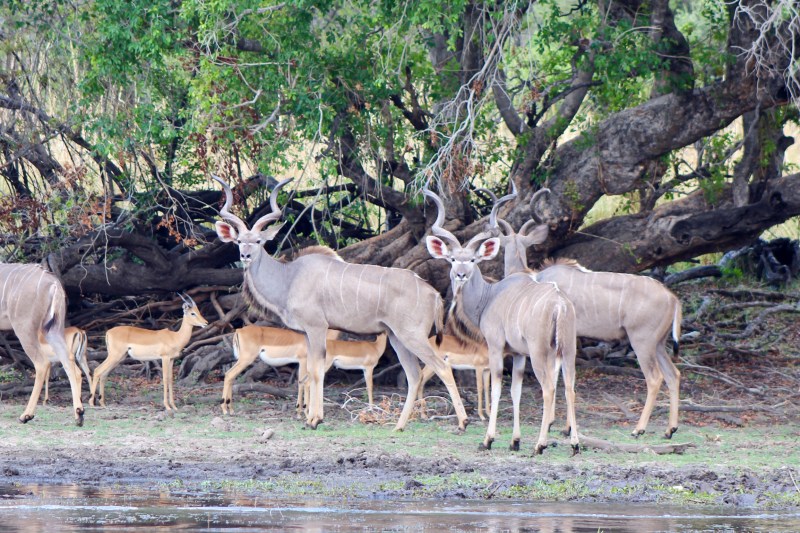
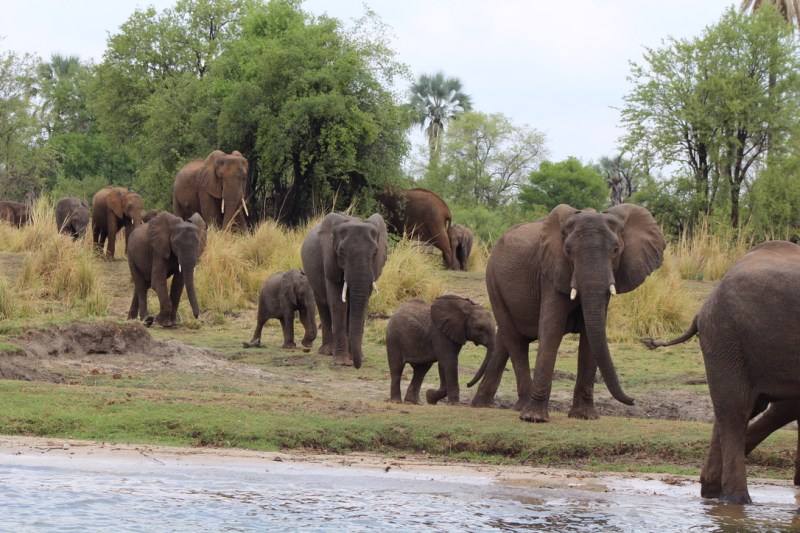
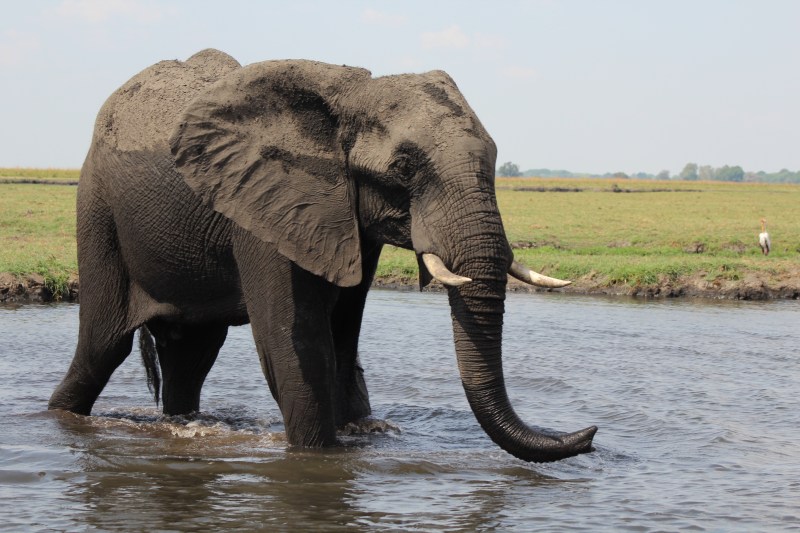
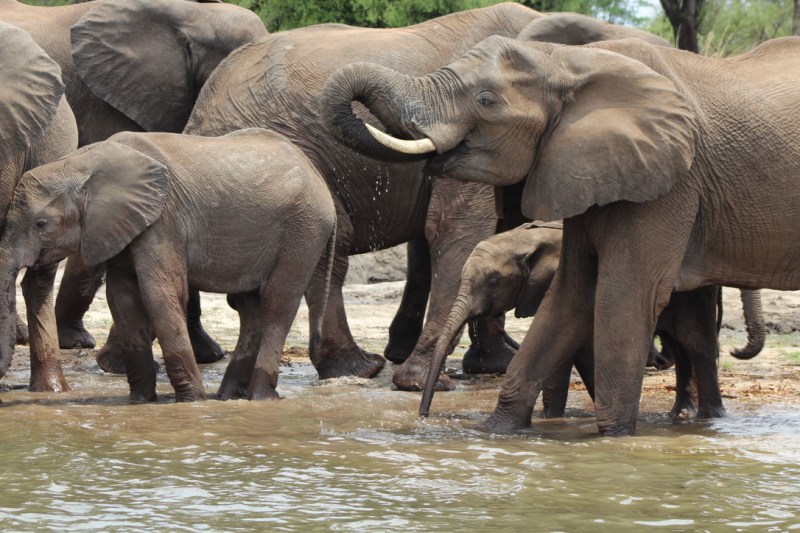
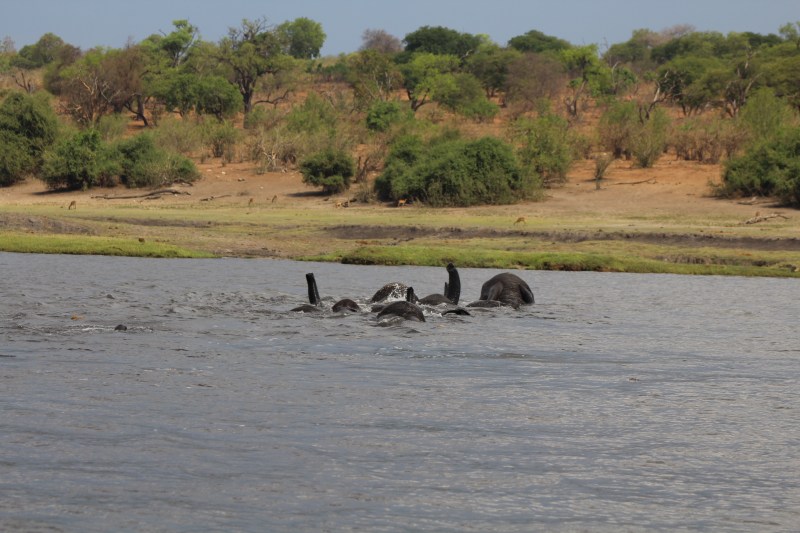
On the return boat ride, we spotted warthogs, kudu, and water buffalo. Then, a special herd of elephants descended a hill to the water’s edge to drink and wash. Ramsay counted them. “115!” Something moved up the river. What were we looking at? Something odd was bobbing on the surface. We marveled at another herd of elephants, swimming underwater, with just their spines and trunks visible, like snorkels.
That evening, Ramsay ordered an exotic meal: crocodile tail medallions with lemon sauce. “What do you think?” I asked. “Kind of like overdone tuna steak mixed with chicken,” he described.
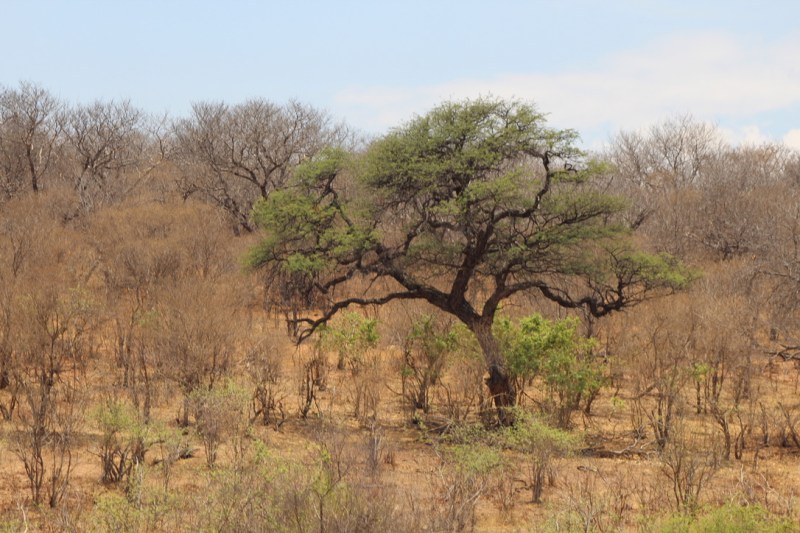
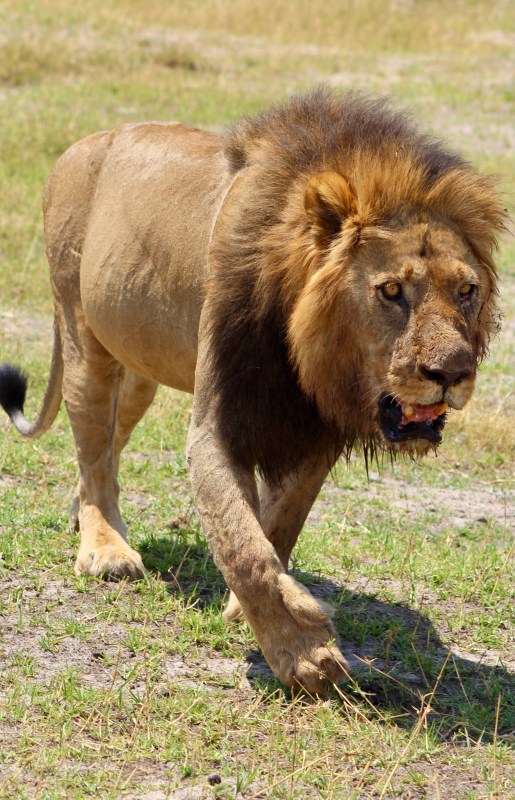
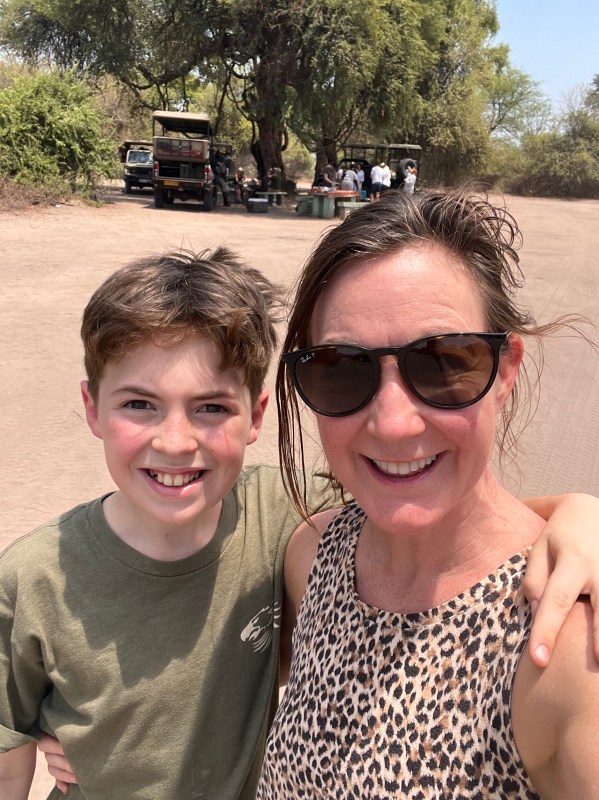
We were spoiled with wildlife before our Botswana trip, but got an adrenaline rush when the safari jeep driver, Maude, announced she’d received word lions were a few kilometers away. “We are going to speed up to catch up to them,” she said before flooring the jeep. “We’re chasing lions, can you believe it?” I asked Rams. He gripped the camera lens in the front seat next to Maude, ready. I took mental snapshots of the acacia trees, the deep red earth, and the wide-open sky. My lips were parched and I was covered in dust, happier than I’d been in weeks, chasing away my own figurative lions. The safari jeep slowed. We held our breath, close enough to see the whiskey-gold flecks in the lion’s eyes.
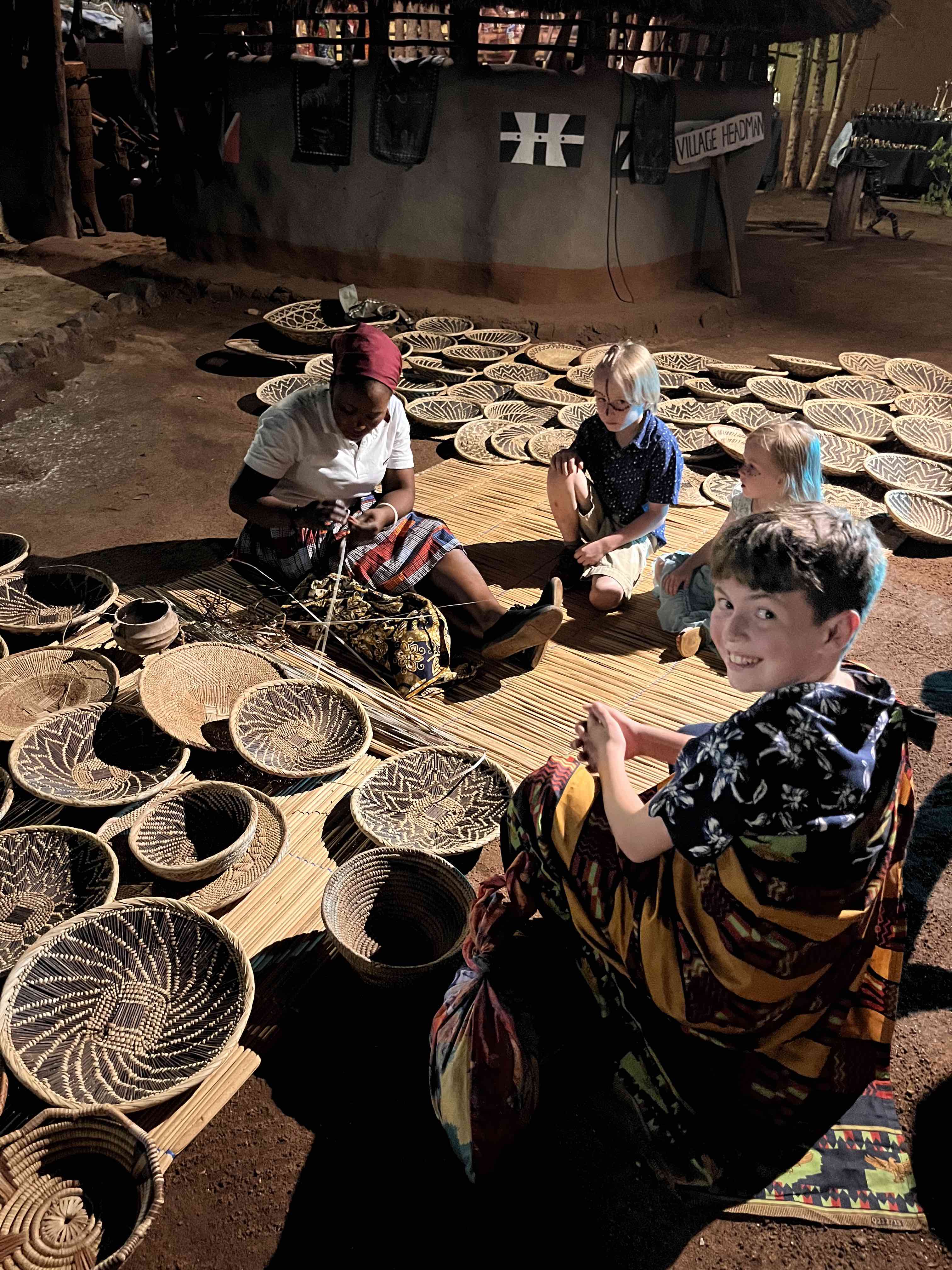
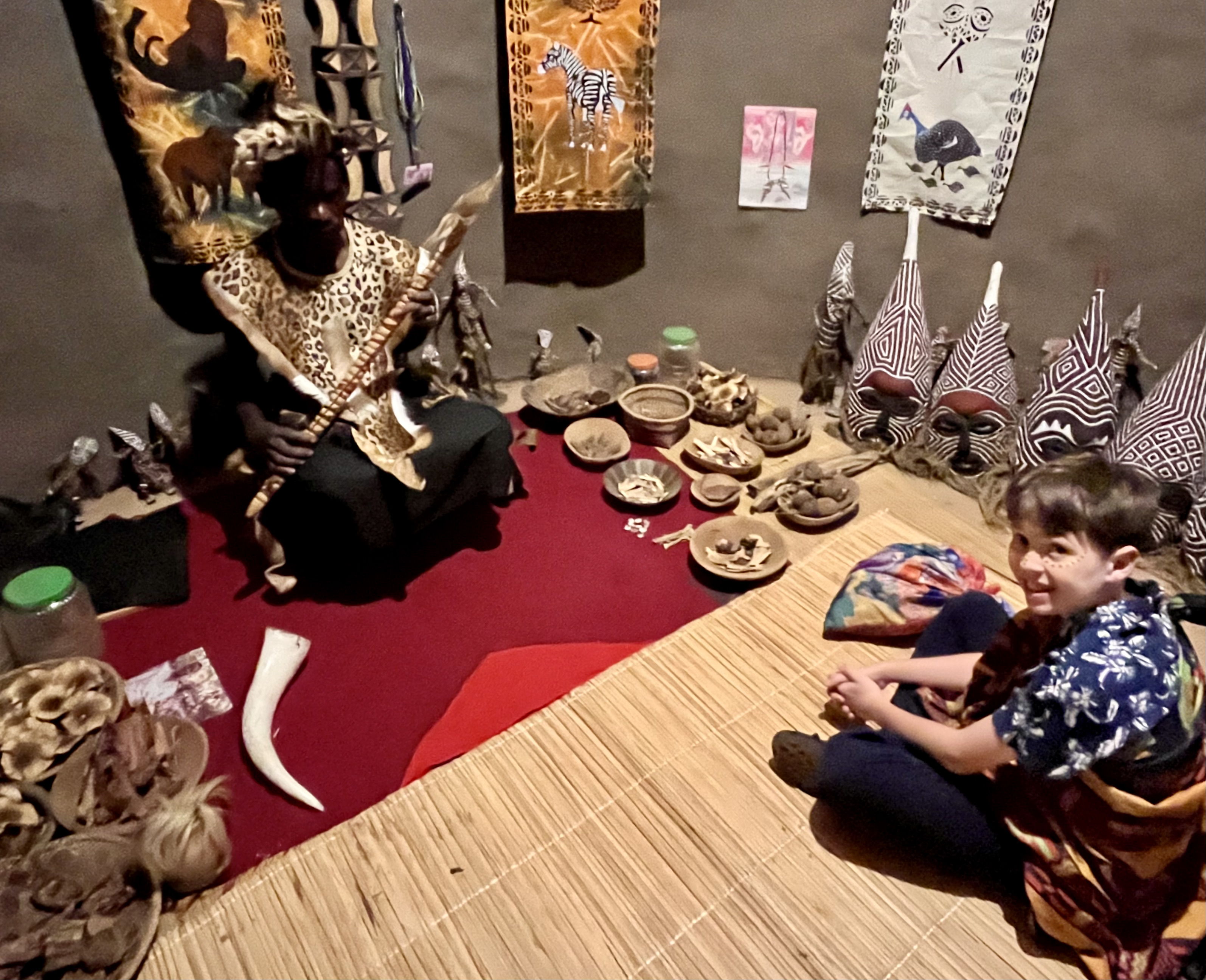
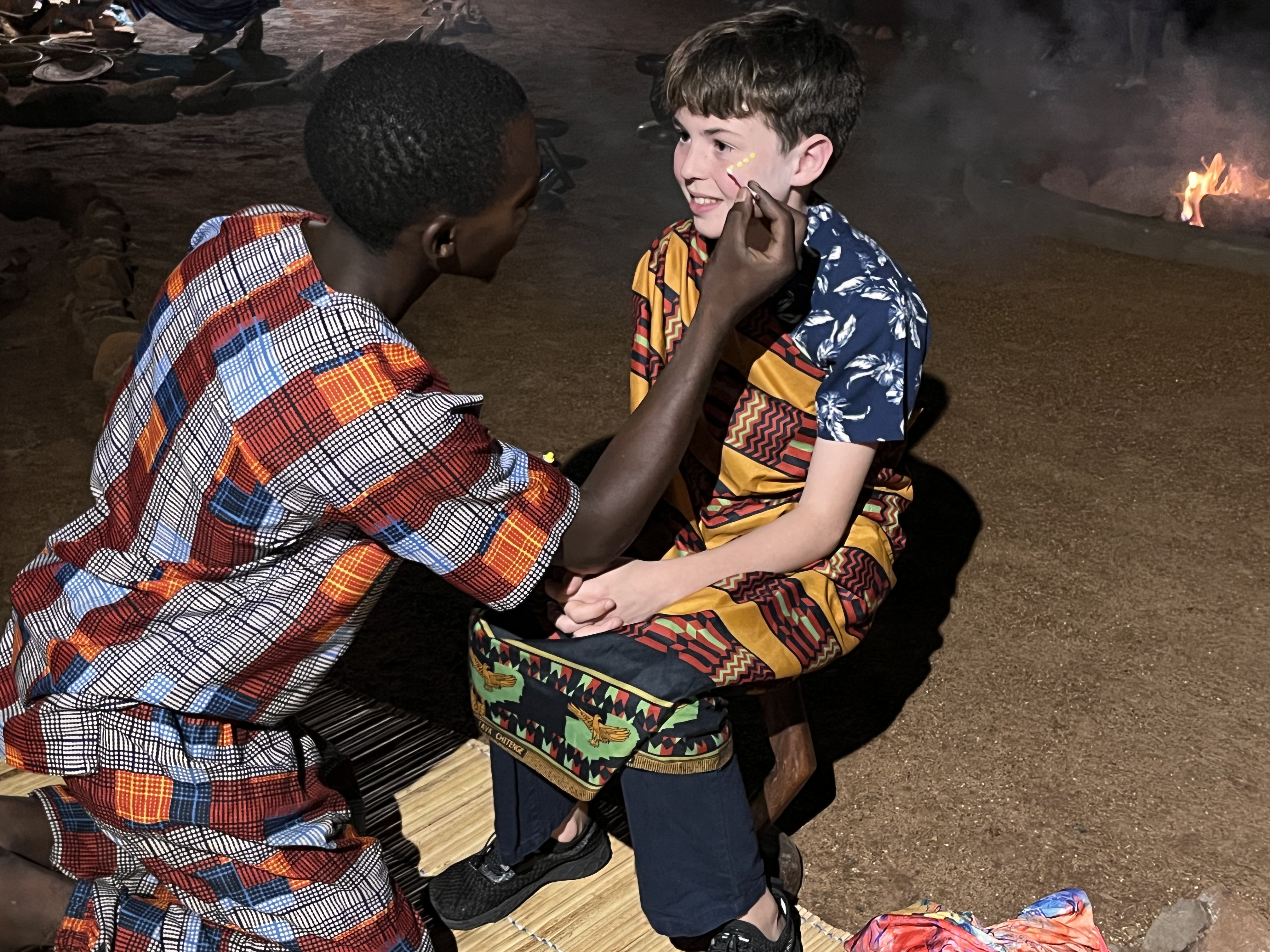
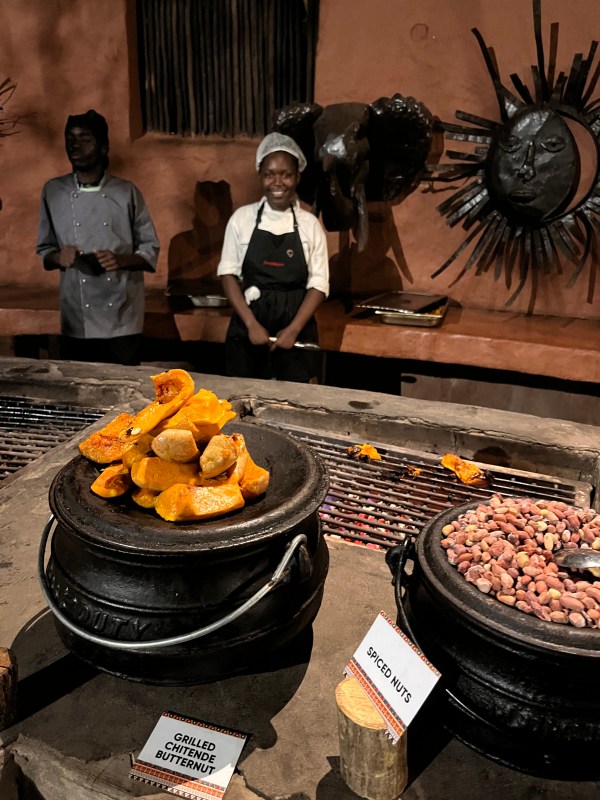
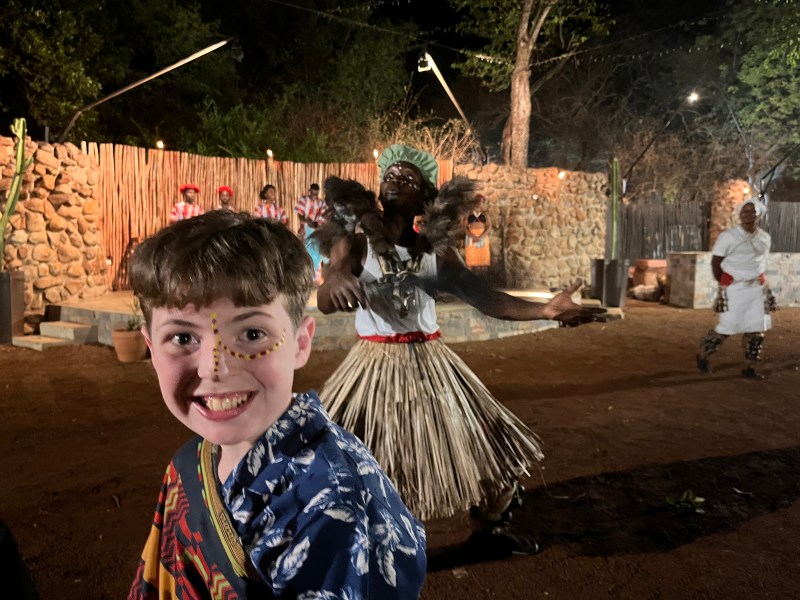
After a long wait at immigration, our tour bus returned to Zambia. Ramsay and I laughed at the name of a local market, “Shams.” For dinner, we attended a “Boma,” set in a traditional village with round huts and thatched roofs around a fire pit. Ramsay and I met a basket weaver, a storyteller, a face painter, and a sangoma (practitioner of ancestral spirits and traditional medicine). The witch doctor held up a rhino horn and beaded stick, predicting a “white shadow” (as opposed to a “dark shadow”) for our futures full of light.
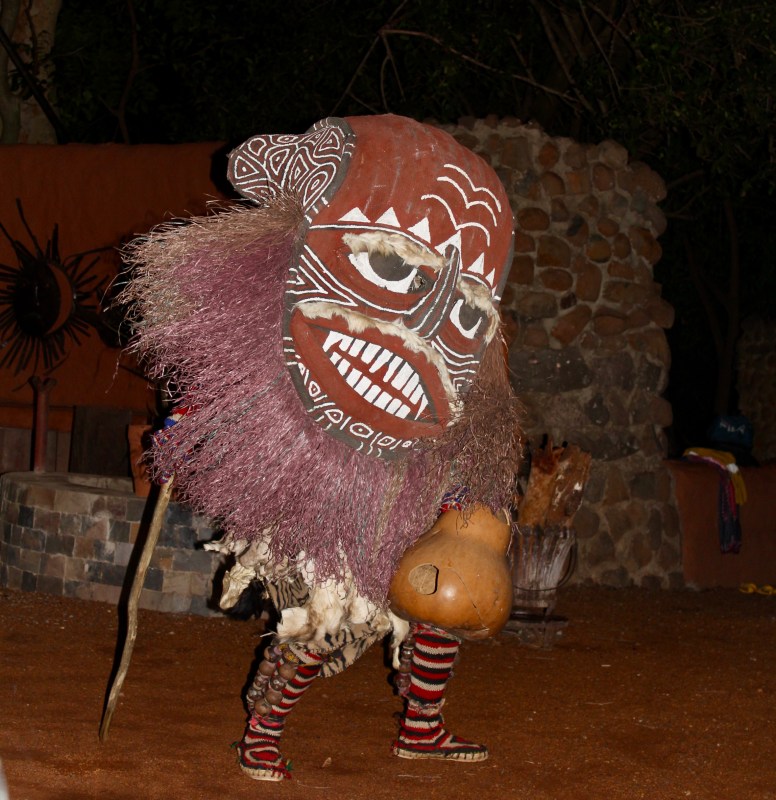
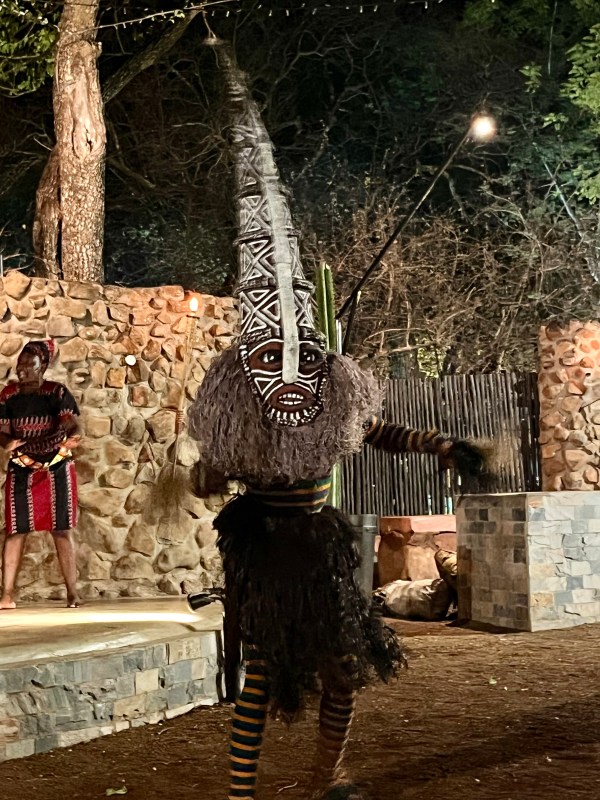
Masked dancers, bongo drummers, and singers in tribal clothing took the stage (and invited dinner guests to join-guess who did)? Ramsay nearly dropped his fork when a tribesman ate fire from the end of a stick. I was equally impressed by one of our picnic table mates, Dean, who quietly revealed he’d been to 80 countries. He looked young. I was curious (and envious) how his job in IT allowed for so much freedom but didn’t ask. His 2025 goal was to travel to his 100th nation. Before bed, Ramsay and I reflected on Dean’s goal and the interesting people we’d met on our trip, like the medical duo on safari from India and a sign-language interpreter at the breakfast buffet. “Zambia is a lot like Georgia. Come as strangers, leave as friends,” Ramsay remarked.
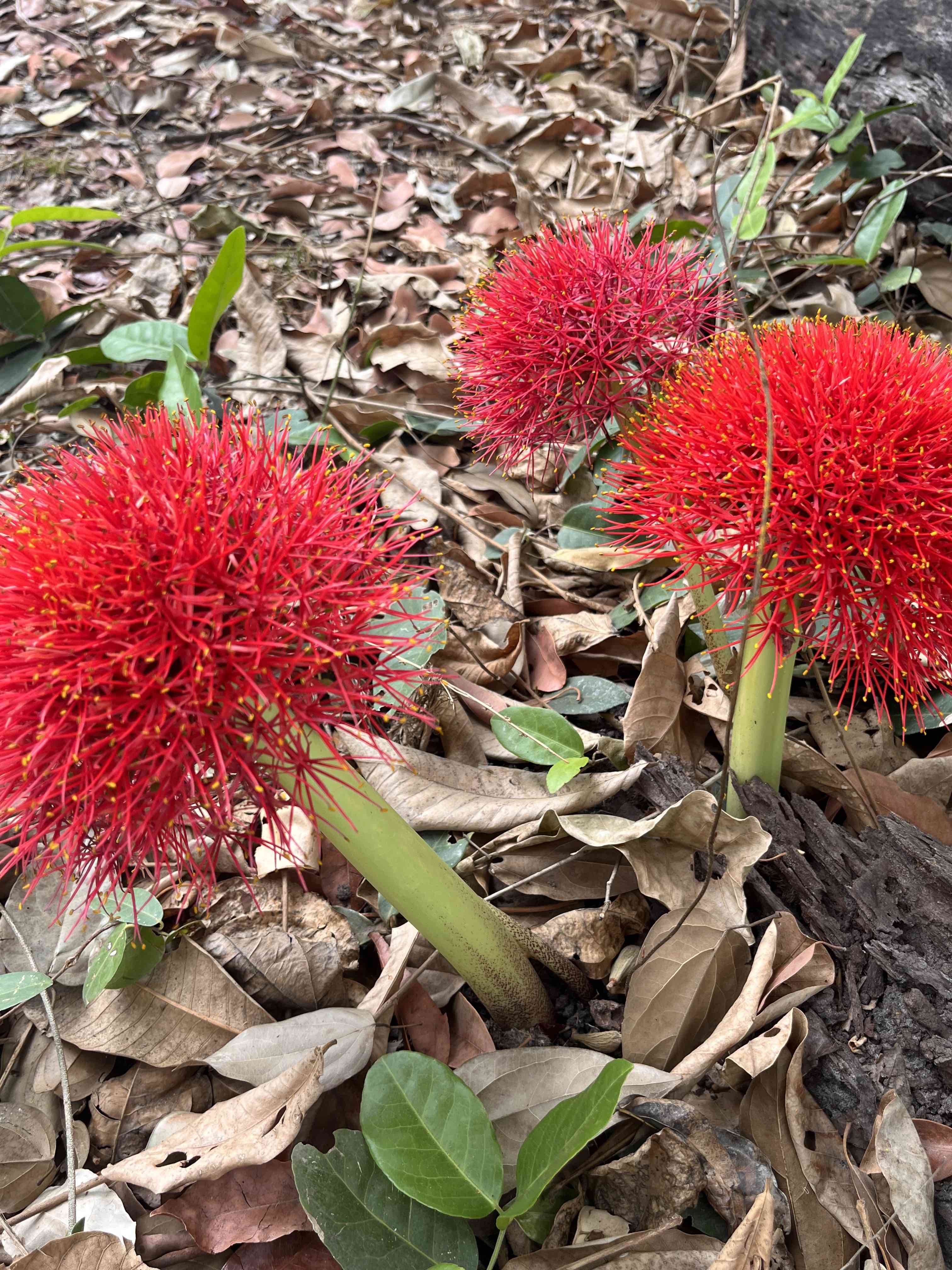
On our last day, we visited Livingstone Island. We disembarked from the boat and followed the footsteps of Dr. Livingstone, single file on a sandy path through the dry brush. Red flowers dotted the landscape, erupting through the brown leaves like fireworks. The heat was oppressive, the kind that bakes and makes you seek a shady spot to lie down. I swatted away flies and silently begged for a breeze. “Loo With A View, anyone?” We were shown a tented bathroom that opened to the Zambesi River.
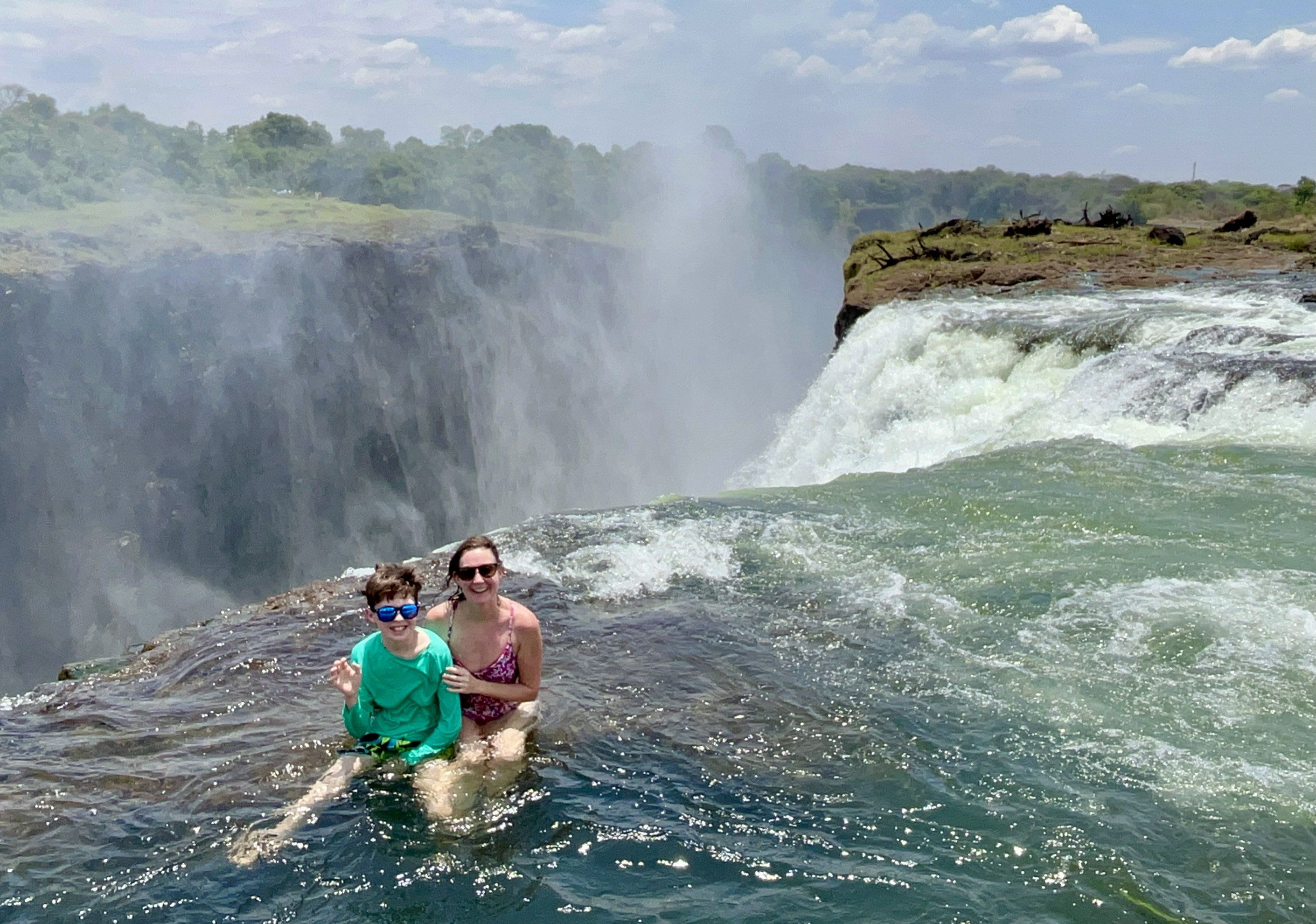
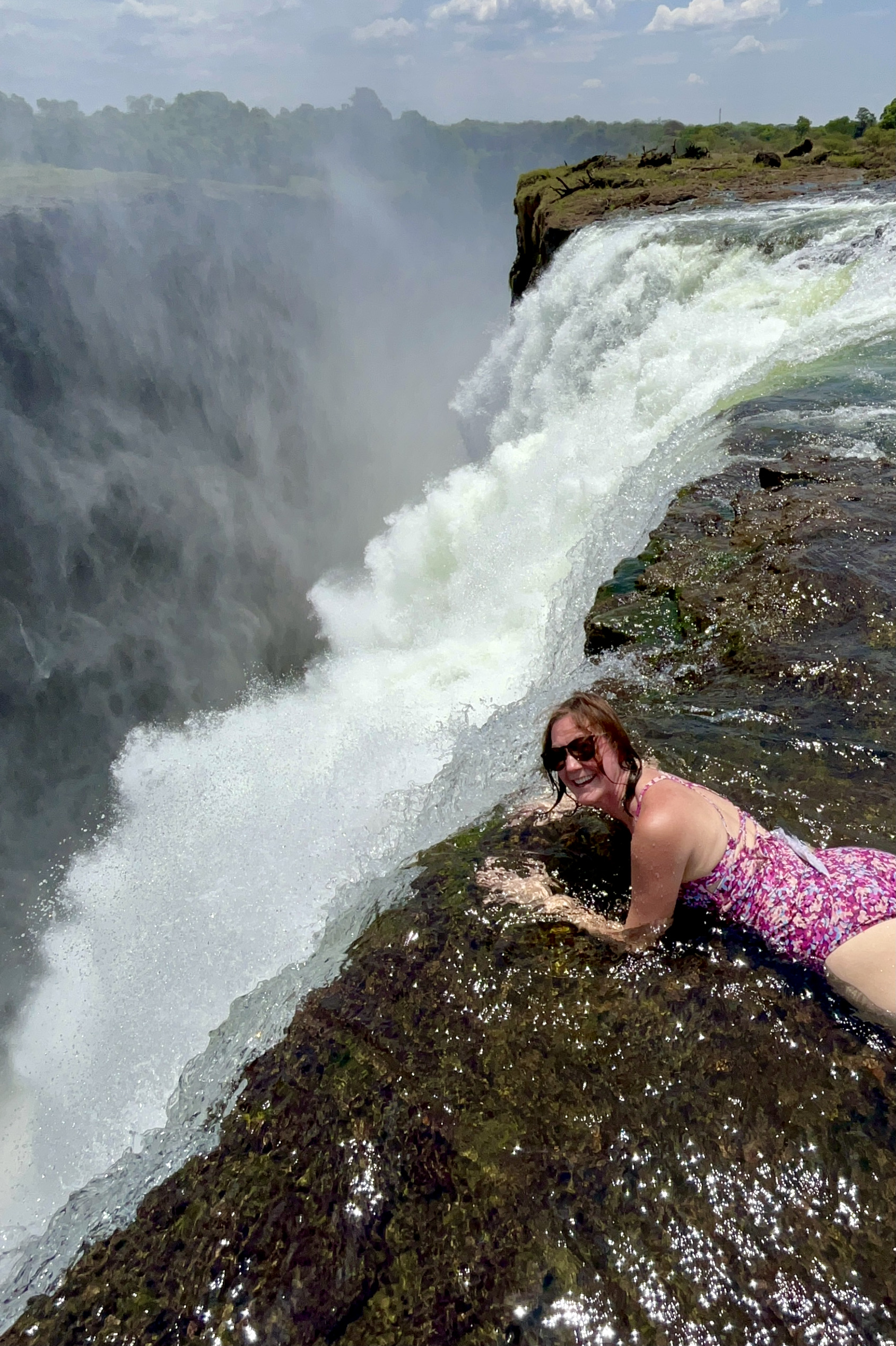
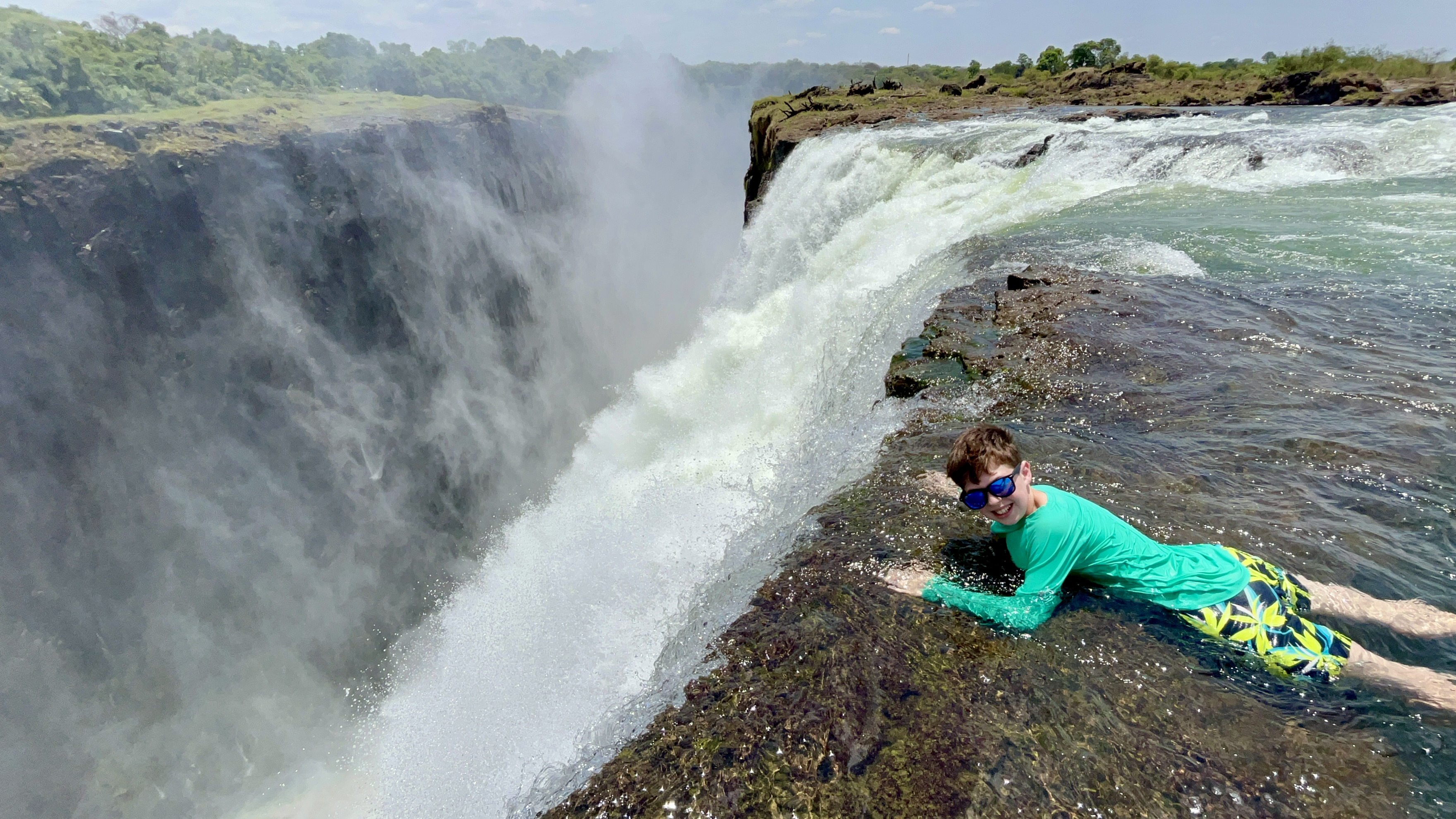
We formed a human chain to crab sideways across rocky terrain into the water until we reached a rope line and swam across toward Devil’s Pool. The meaning on the guide’s T-shirt “Life on the Edge” didn’t register with me until we swam to that edge; thrilling and daunting as we peered over the lip of the rock, one by one, with the guide holding our ankles. A majestic rainbow arced in the mist. It was exhilarating, being so close to thundering water. It rushed powerfully over the ledge in volumes like I’d never heard or seen. I felt alive. It was Ramsay’s turn. I held his hand tightly until the guide had a hold of him. Ramsay’s smile said it all: wow, this was a moment! (A parenting decision later questioned by my husband in jest).
At sunset, Ramsay stopped outside by a hotel wall and created a shadow puppet that looked uncannily like a real bird. He butterflied his hands together, making it take flight; a metaphor for our time in Zambia that had come to an end. I wished for this adventure and connection with wildlife, joyful people, festive music, and magic to carry us forward through the next several months of transition.
Our three-year assignment in Libreville began with a curious incident at the airport. With six rolling suitcases in tow, we exited the customs area, where a uniformed man was inspecting a styrofoam box. “Pangolin,” he said in a defeated French accent, shaking his head. A quick search later on my phone revealed that Pangolin, an ant-eater-looking animal, is poached in the Congo Basin for its scales. On a positive note, we’ve also learned that Jeff Bezos’ Earth Fund has pledged $35 million to Gabon for conservation efforts.
During our first two weeks, jetlag morphed into temporary overwhelm, discerning the perils and promises ahead. Even now, commencing week three, my alligator brain craves creature comforts and familiarity. I miss having a car, but also the absence of seemingly insignificant things such as my own comfy pillow and bath mats. Air thick with humidity leaves a thin, damp sheen on the chilly tile inside our home, which seems ironic; cold feet in a tropical climate. Moisture clings to the dust I bring home after walking Biscuit outside, creating a trail of black footprints like a Sherlock Holmes cartoon across the white floor.
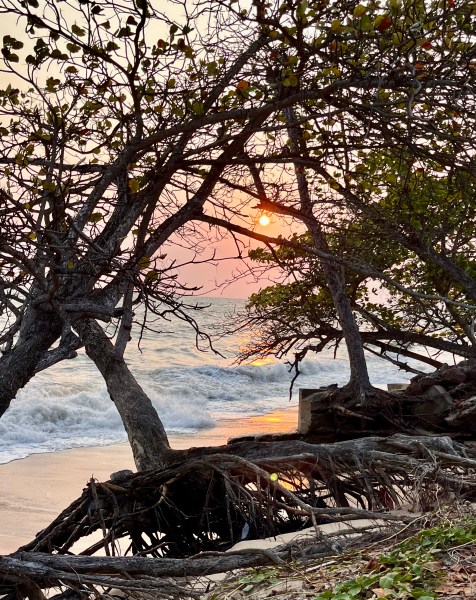
Hacking up a whole pineapple for breakfast with a dull blade, I long for my sharp kitchen knives. “Mom, I didn’t know pineapple came in octagonal shapes,” Ramsay teases. I practice yoga breathing and concentrate on finding the beauty and counting our blessings: we are safe, our condo has a screen porch, we live near the ocean, people are kind, and I’m able to converse with the locals in French. In the evenings, lovely pastel colors bleed into the sky as we watch a fiery orb slip rapidly behind the horizon.
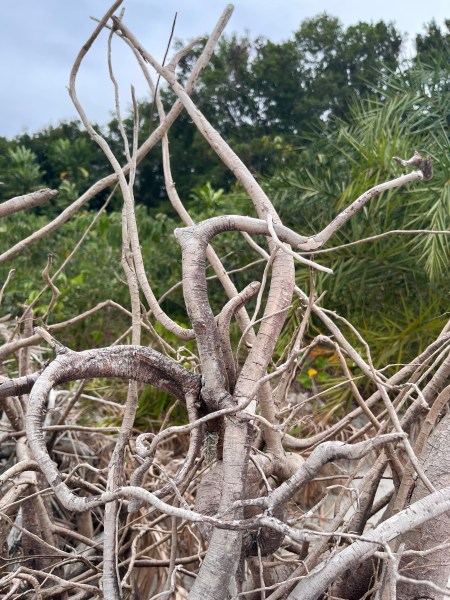
Having grown up in the U.S. on the east coast, it seems odd to view the Atlantic from the west. Below swaying palms, corpulent trunks of driftwood lay strewn across Libreville’s beaches, their chalky branches reaching toward the ocean with knarled, thirsty fingers. Tangles of roots like wild, messy hair add to the untamed seascape. The scenery is gorgeous, but the water near our house isn’t swimmable due to sewage, old shoes, plastic bottles, and shards of the forgotten. Perhaps Ramsay and I can participate in beach clean-ups and join the Sea Turtle Patrol we’ve heard about.
There have been surprises, good and bad. After accepting an impromptu invitation for a glass of wine on the beach to bid an embassy friend farewell whom we’d only just met, my mouth hung open slightly when bats appeared with the wingspans of crows and heads nearly as big as kittens. (not kidding). But the next morning, also taking flight, were uplifting lemon-yellow weaver birds, turquoise-tinged Kingfishers, and a grey and red parrot; the yin and yang of living in an exotic locale.
Parts of the city resemble the Caribbean, full of tropical vibes, dance music, and riotous color: the brightly painted houses, cheerful Hibiscus, lizards with orange tails, and exotic flora and fauna. As in many developing nations, the stunning beauty here is juxtaposed with dilapidation and brokenness behind the scenes, especially the trash on the shores.
In contrast, further afield, on the outskirts of Libreville, (via a forty-minute 4×4 drive over bumpy dirt roads through the edge of the Congo forest), lies a stunning, rugged coastline where sea and sky meld into a nickel-colored light of other-worldliness.
Along with its rich biodiversity, Gabon hosts malaria and other infectious diseases. Week One, Ramsay broke out in bright red hives from an allergic reaction. My Mama-brain went into overdrive for days as I sterilized sheets, towels, and surfaces. Should we treat it as something fungal or bacterial? Did it come from the ocean? the pool? new sunscreen? sand fleas? new plants, fruit juice, insects… or maybe from the laundry detergent? The Malaria Meds? ( I stalk mosquitoes in the house with my hands open in attack position as if they are tiny armed robbers). Alas, the source of the outbreak is still unknown, but we are enormously grateful Ramsay is on the mend.
The local food we’ve tried so far is good. Oil-rich Gabon imports 90% of its food, much of it from France. Commonly offered are grilled kabobs “brochette” of gambas, fish, or chicken served with rice, fries, or potatoes au gratin. The French influence is apparent in the grocery stores and boulangeries. To my delight, there are abundant cheeses, macarons, fresh baguettes, and good quality tea. And Mohammed at the unmarked Lebanese place near the airport makes very tasty Shawarma. We sit on his patio overlooking the main road (one of the few that are paved), where traffic is occasionally blocked by President Bongo’s siren-happy motorcade.
In an artisan market, I was informed that many handicrafts here are imported, too. However, I did find local bird collages made with butterfly wings (and I’m hoping this art was not created from illicit trade because I love this creation).
Awaiting our air and sea shipments to make our house feel more like home, I clean the screens and windows and re-arrange the furniture to claim this new space as ours. We engage with our new community of friends and begin to develop rituals, like having coffee on the beach, going outside to watch the sunsets, and sometimes indulging in local ice cream before lunch just for fun.
As we create wish lists of places to see, we remind ourselves on the difficult days to anticipate the magic that always comes with exploring a new land.



































 Carpe Diem Creative